
Commercial Countertop Installation Suffolk County, NY
Your Countertop Tells Clients Who You Are
Commercial countertop installation on Suffolk County, NY done right — custom-fabricated, warranty-backed, and scheduled around your business hours, not ours.

THE DETAILS THAT MATTER
What Actually Separates Us
Warranty-Backed Every Time
Every commercial countertop installation we complete is backed by a warranty — your investment is protected long after we leave the job site.
Custom Fabricated to Fit
We manufacture every surface to the exact measurements of your commercial space — no gaps, no compromises, no off-the-shelf shortcuts.
Scheduled Around Your Business
We work around your operating hours — including evenings and weekends — so your business keeps running while we get the job done.
Commercial Projects, Not an Afterthought
We bring the same premium, bespoke approach to commercial spaces that most installers reserve exclusively for high-end residential clients.
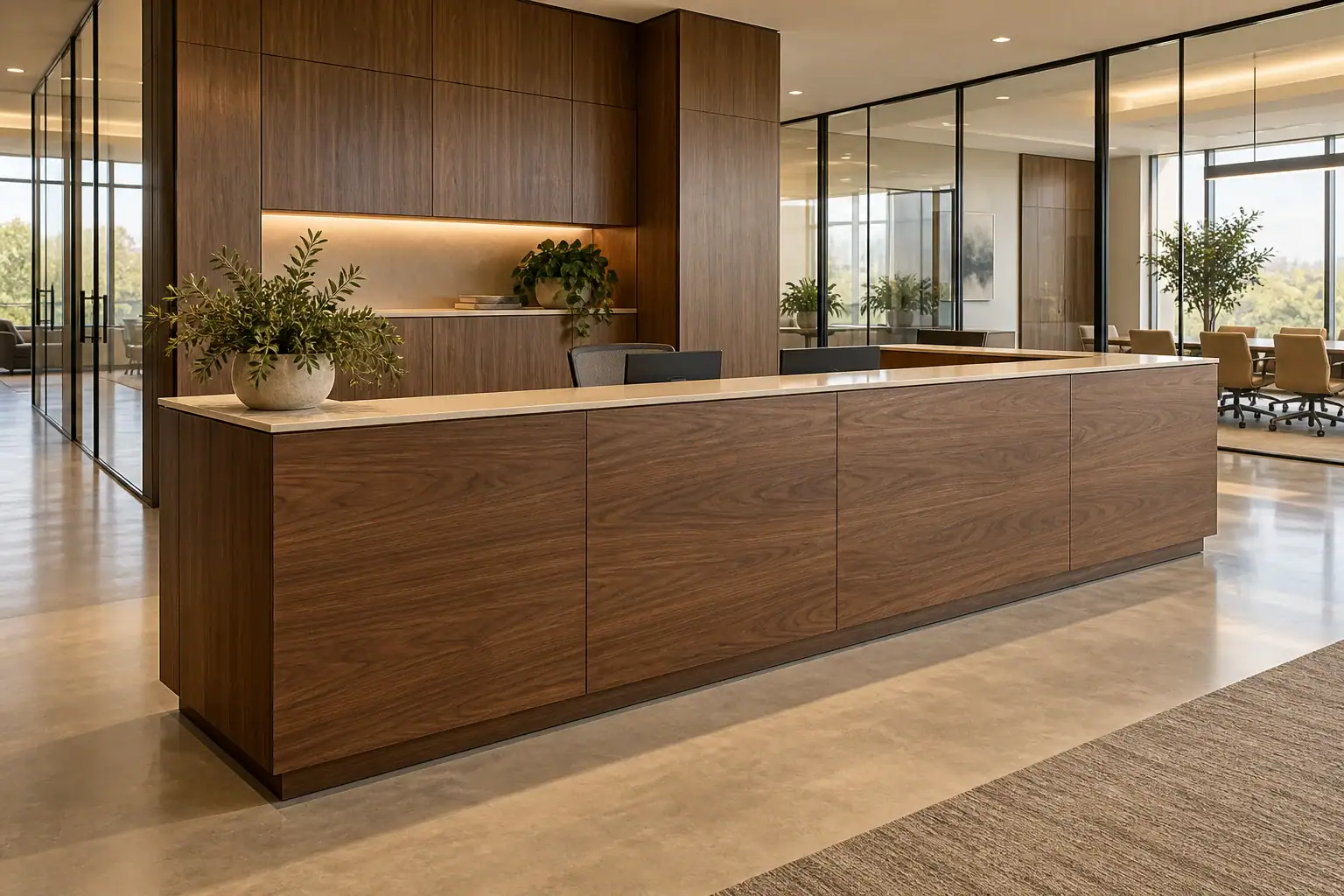
Commercial Countertop Services Suffolk County, NY
Long Island Businesses Deserve More Than a Residential Installer
Most countertop contractors on Long Island built their business around homeowners. Commercial work — restaurants, medical offices, corporate spaces, retail environments — gets treated like a side job.
The materials are different. The timeline pressures are different. The stakes are different. You already know this.
At Sir James Management Corp, commercial countertop installation on Suffolk County, NY is not an extension of what we do for kitchens and bathrooms. It is its own discipline. We work with business owners, general contractors, and commercial project managers across Nassau County and Suffolk County who need surfaces that perform under real daily pressure — and need an installer who understands what that actually means.
Commercial Grade Countertop Suffolk County, NY
What You Get When It's Done Right
A properly installed commercial countertop does more than look good — it holds up, stays compliant, and reflects the quality of your business.
Your countertop surfaces meet the durability demands of high-traffic commercial use without showing wear within the first year.
You avoid costly health code violations because your food-service surfaces are specified and installed to meet food safety requirements from day one.
Your renovation project stays on schedule because we coordinate directly with your general contractor, plumber, and other trades — not around them.
You keep your doors open during installation because we plan around your operating hours, not the other way around.
You get material guidance specific to your environment — whether that is a restaurant kitchen on Sunrise Highway or a medical suite near a Northwell Health campus.
Your commercial space communicates quality to every client who walks through the door, because the surface they see and touch reflects the standard you hold.
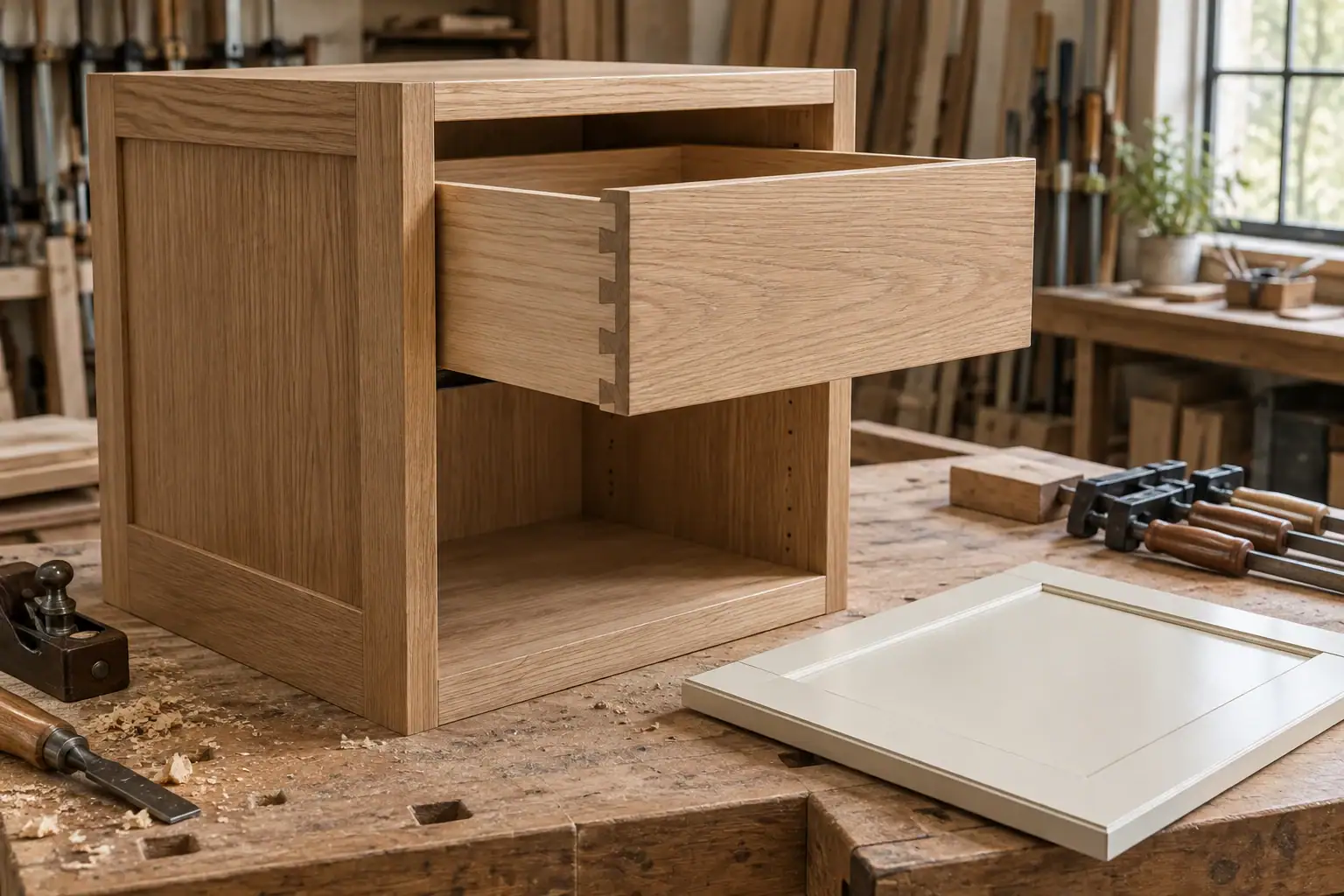
Restaurant Countertop Installation Suffolk County, NY
The Right Surface for the Right Commercial Space
A restaurant counter on Sunrise Highway takes a different kind of beating than a reception desk in a Melville office park. A medical procedure room in a Nassau County outpatient facility has entirely different surface requirements than a boutique hotel bar in the Hamptons.
The material that works perfectly in one commercial environment can be the wrong call in another. That is the conversation we have before anything gets measured or fabricated.
We look at how the space is actually used — the heat exposure, the cleaning chemicals, the foot traffic, the health department requirements — and we match the material to those conditions. Quartz, granite, porcelain, engineered stone: each has a place. Our job is to help you understand which one belongs in yours, and why. That guidance is part of the service, not an upsell.
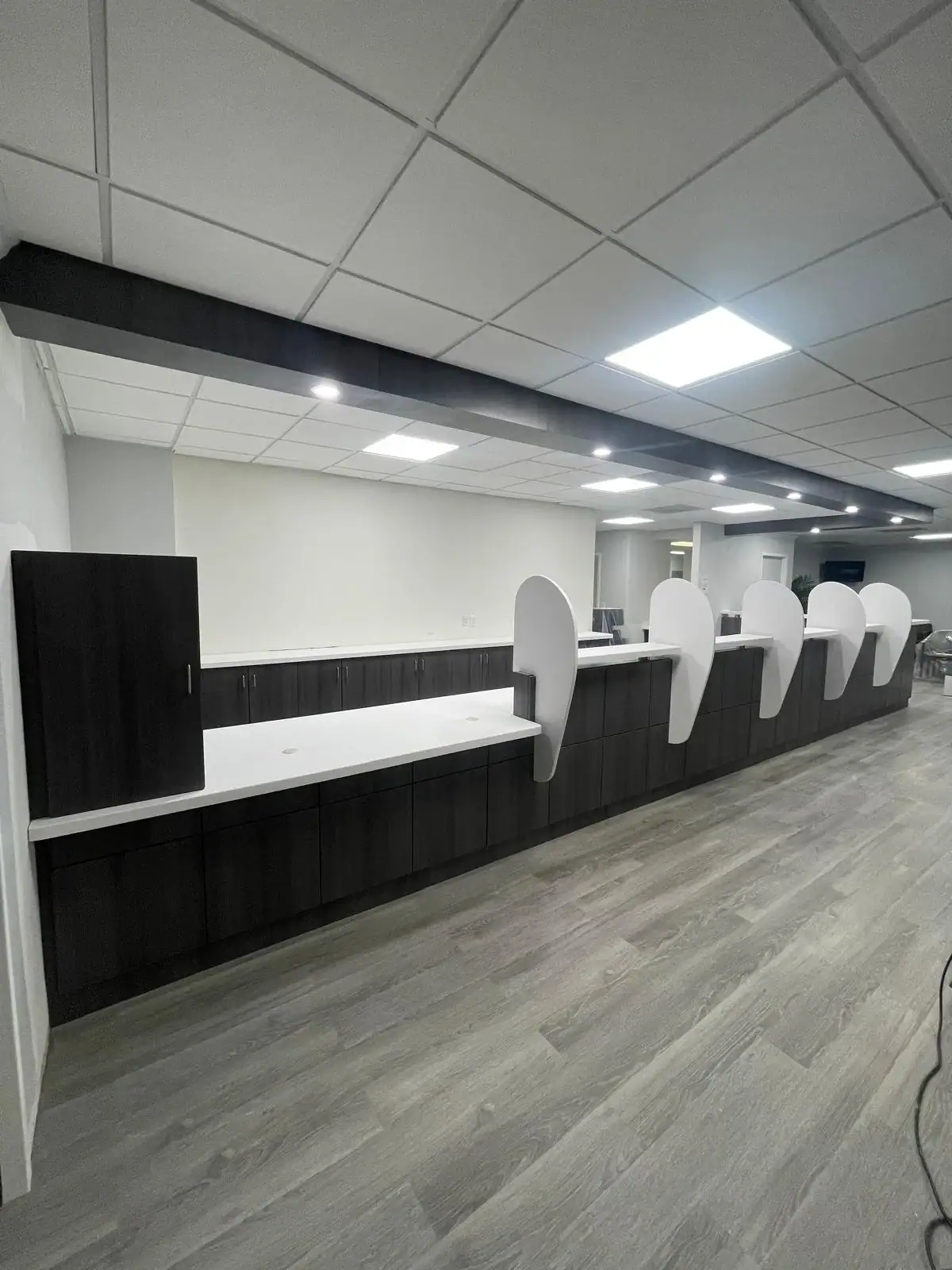
Commercial Countertop Replacement Suffolk County, NY
From Field Measurement to Final Seal — We Handle It
Commercial countertop installation is not just cutting stone and dropping it in place. It starts with precise field measurements — because real commercial spaces in older Long Island buildings are rarely perfectly square — and it ends with proper sealing and a walkthrough of your maintenance schedule.
Everything in between is managed as a coordinated process, not a series of disconnected tasks. We take physical templates from your space before a single piece of material is cut. We fabricate to those exact dimensions. We schedule the installation at the right phase of your construction or renovation timeline.
When the work is done, we leave you with a surface that is sealed, finished, and ready for the demands of your business — not something that needs a follow-up call two weeks later.
Commercial Countertop Installer Suffolk County, NY
A Clear Process with No Surprises
Consultation and Site Review
We visit your commercial space, assess the environment, and discuss material options that fit your use case and timeline.
Field Measurement and Fabrication
We take precise measurements, create templates from your actual space, and custom-fabricate every surface to exact dimensions.
Installation, Sealing, and Handoff
We install on your schedule, apply proper sealant, and walk you through everything before we consider the job complete.
FREQUENTLY ASKED QUESTIONS
A few more details.
Questions about commercial countertop installation? Start here, or talk to James about your project.
Ask a QuestionWhat is the difference between commercial and residential countertop installation?
The differences are significant enough that they really should not be treated as the same job. Commercial countertops are exposed to far more daily stress — constant use, frequent cleaning with industrial-strength products, heat, impact, and in food-service environments, strict sanitation requirements.
The materials need to be specified for that level of use, not just selected for appearance. The installation process also involves coordination with general contractors, plumbers, and electricians in a way that most residential jobs simply do not.
On Long Island, where many commercial spaces occupy older buildings in downtown areas like Hempstead, Huntington, or Patchogue, field conditions add another layer of complexity that a residential installer is often not equipped to handle. Uneven floors, out-of-square walls, and tight work windows around operating hours require experience that goes beyond standard residential practice.
Can commercial countertop installation be completed without closing my Long Island business?
In most cases, yes — and this is one of the first things we plan around. We understand that a restaurant on Long Island cannot close for a week, and neither can a medical office or a retail space.
We schedule installation around your operating hours, which often means evening or weekend work. For larger projects we approach it in phases so that only one section of your space is out of service at a time. The key is planning this from the start, not figuring it out after the countertops are already on the truck. We have that conversation at the consultation stage so there are no surprises once work begins.
What countertop materials are best for a commercial kitchen or restaurant?
For food-service environments, you want surfaces that are non-porous, resistant to heat and scratches, and easy to sanitize consistently. Quartz is a strong choice because it is engineered to be non-porous and does not require the same level of ongoing sealing that natural stone does.
Properly sealed granite is also widely used in commercial kitchens. Stainless steel is the standard in professional kitchen prep areas, though it is less common in front-of-house surfaces where appearance matters more. The right answer depends on where in the restaurant the countertop is going — a service bar, a host stand, and a prep counter each have different demands. We walk through those specifics during the consultation so the material decision is based on your actual use case, not a general recommendation.
Do commercial countertops in New York need to meet health code requirements?
Yes, and this is a detail that gets overlooked more often than it should. In New York, food-service environments are subject to health department inspections that include surface materials. Countertops in commercial kitchens and food preparation areas are generally required to be non-porous, non-toxic, smooth, and cleanable — standards that align with NSF/ANSI 2 certification for food equipment surfaces.
If you are operating a restaurant, café, catering facility, or any commercial kitchen on Long Island, the surface material and its condition can become a compliance issue during inspection. We factor this into material selection and installation from the beginning, so you are not discovering a problem after the health inspector visits.
How long does commercial countertop installation take on Long Island?
It depends on the scope of the project, but a typical commercial countertop installation — from initial consultation through completed installation — generally runs two to four weeks. The fabrication phase, which begins after field measurements and templates are taken, accounts for most of that time.
The actual installation day or days are usually a smaller portion of the overall timeline. For projects in the Hamptons, where operators are working against a hard deadline before Memorial Day weekend, we plan the schedule backwards from your target opening date to make sure fabrication and installation are sequenced correctly. The earlier you get us involved in your renovation timeline, the more flexibility we have to work around your schedule and any coordination requirements with your general contractor.
How do I know if a countertop contractor is actually qualified for commercial work in Suffolk County, NY?
A few things to look for. First, ask directly whether they have completed commercial projects — restaurants, offices, medical facilities — not just residential remodels. The experience is genuinely different, and a contractor who primarily does home kitchens may not be familiar with health code surface requirements, commercial-grade material specifications, or how to coordinate with a general contractor on a construction timeline.
Second, confirm they carry adequate general liability insurance and workers’ compensation coverage — commercial clients on Long Island routinely require proof of insurance before work begins. Third, ask about their fabrication process. A contractor who custom-fabricates from field measurements is doing something meaningfully different from one who sources pre-cut slabs and adapts them to fit.
Finally, ask what happens after installation — a warranty on workmanship is a signal that the contractor stands behind what they deliver, which matters considerably more in a commercial environment where failure has real business consequences.
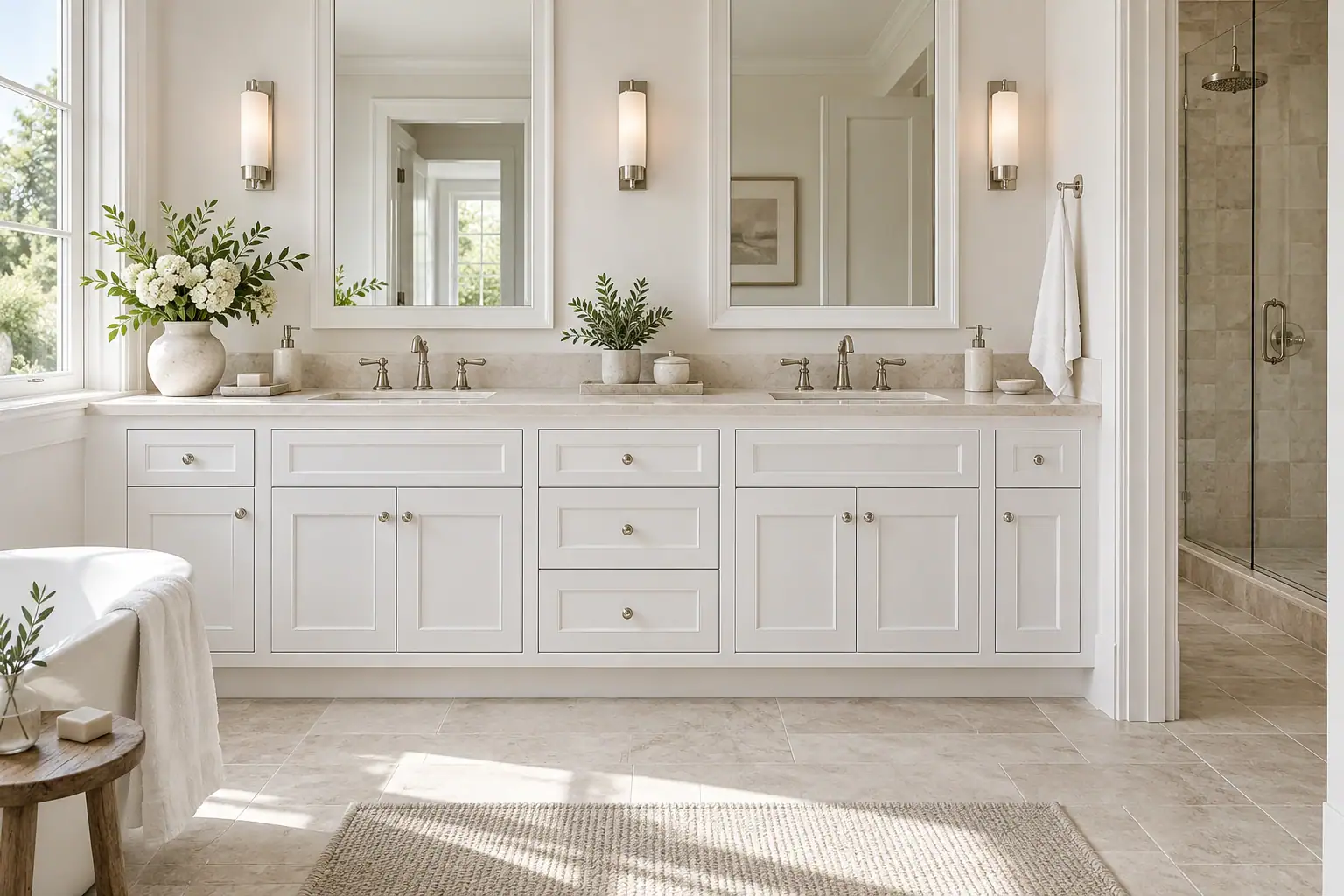
Bathroom Remodeling
Most Long Island homes deserve better than a stock vanity and a tile swap. We design and build custom bathrooms — from…
Explore Service
Commercial Cabinets
If you're renovating a medical office in Nassau County or fitting out a retail space along the Route 110 corridor, the cabinets…
Explore Service
Commercial Millwork Installation
When fabrication and installation answer to the same team, fit problems disappear and timelines hold. Sir James Management Corp delivers commercial millwork…
Explore Service