Kitchen Remodel Contractor Suffolk County, NY
Your Kitchen Built to Fit — Not Forced to Fit
Most Long Island kitchens weren’t designed for the way families actually live today. We build custom kitchens from scratch — measured, crafted, and installed to match your space exactly.

THE DETAILS THAT MATTER
What Makes Our Work Different
Bespoke Cabinetry, Built In-House
We manufacture our own cabinetry — nothing is ordered from a catalog. Every cabinet is built to the exact dimensions of your Long Island kitchen.
Warranty-Backed Craftsmanship
Every kitchen we complete is backed by a warranty, so your investment is protected long after the final walkthrough is done.
Full Kitchen Planning Included
We handle the full scope — from layout planning through final installation — so you're never left coordinating between separate contractors.
Long Island Local Knowledge
We understand Nassau and Suffolk County homes — the older layouts, the permit requirements, and the design standards this market expects.

Kitchen Remodeling Services Suffolk County, NY
A Kitchen That Actually Works for Your Home
A lot of Long Island homes were built between the 1940s and 1970s — Cape Cods, ranch homes, split-levels with galley kitchens that made sense for a different era. Today, those same kitchens feel cramped, disconnected, and out of step with how families cook, gather, and entertain.
The walls are rarely square. The ceilings are often lower than standard. And the layouts were never designed for a kitchen island, an open floor plan, or modern appliances. That’s exactly the kind of space we work best in.
At Sir James Management Corp, we provide complete kitchen remodeling services across Long Island — from the initial planning conversation through the final installation. We don’t just drop in a new set of cabinets and call it a day. We look at the whole room, understand how you use it, and build a kitchen that fits the space and the life happening inside it.
Custom Kitchen Renovation Long Island
What You Actually Get From a Real Custom Kitchen
When cabinets are built for your space — not adapted to it — everything from storage to flow to daily function improves in ways you'll notice immediately.
Cabinets that reach the ceiling, fill every corner, and leave no awkward gaps or filler strips behind.
A layout designed around how you actually cook — not a floor plan borrowed from a showroom display.
No more choosing from a manufacturer's preset options — every detail is built to your specifications.
Your kitchen adds real, documented value to your Long Island home, with minor remodels nationally returning up to 96% of their cost at resale.
One point of contact from planning through completion — no juggling between a designer, a cabinet supplier, and a separate installer.
Warranty coverage that holds after the project closes, so you're not on your own if something needs attention down the road.

Bespoke Kitchen Cabinets Suffolk County, NY
Stock Cabinets Don't Fit Long Island Homes
Here’s something most homeowners don’t realize until they’re already mid-project: the word “custom” gets used loosely in the kitchen remodeling industry. Most contractors who call themselves custom kitchen remodelers are actually resellers. They pick from a national manufacturer’s catalog — Kemper, Waypoint, KraftMaid — choose the finish and the door style, and install what arrives on a pallet. That’s semi-custom at best.
The dimensions are still fixed. The sizes are still standard. And when your kitchen doesn’t match those standards — which is common in Long Island’s older housing stock — you end up with filler strips, trimmed panels, and corners that never quite look right.
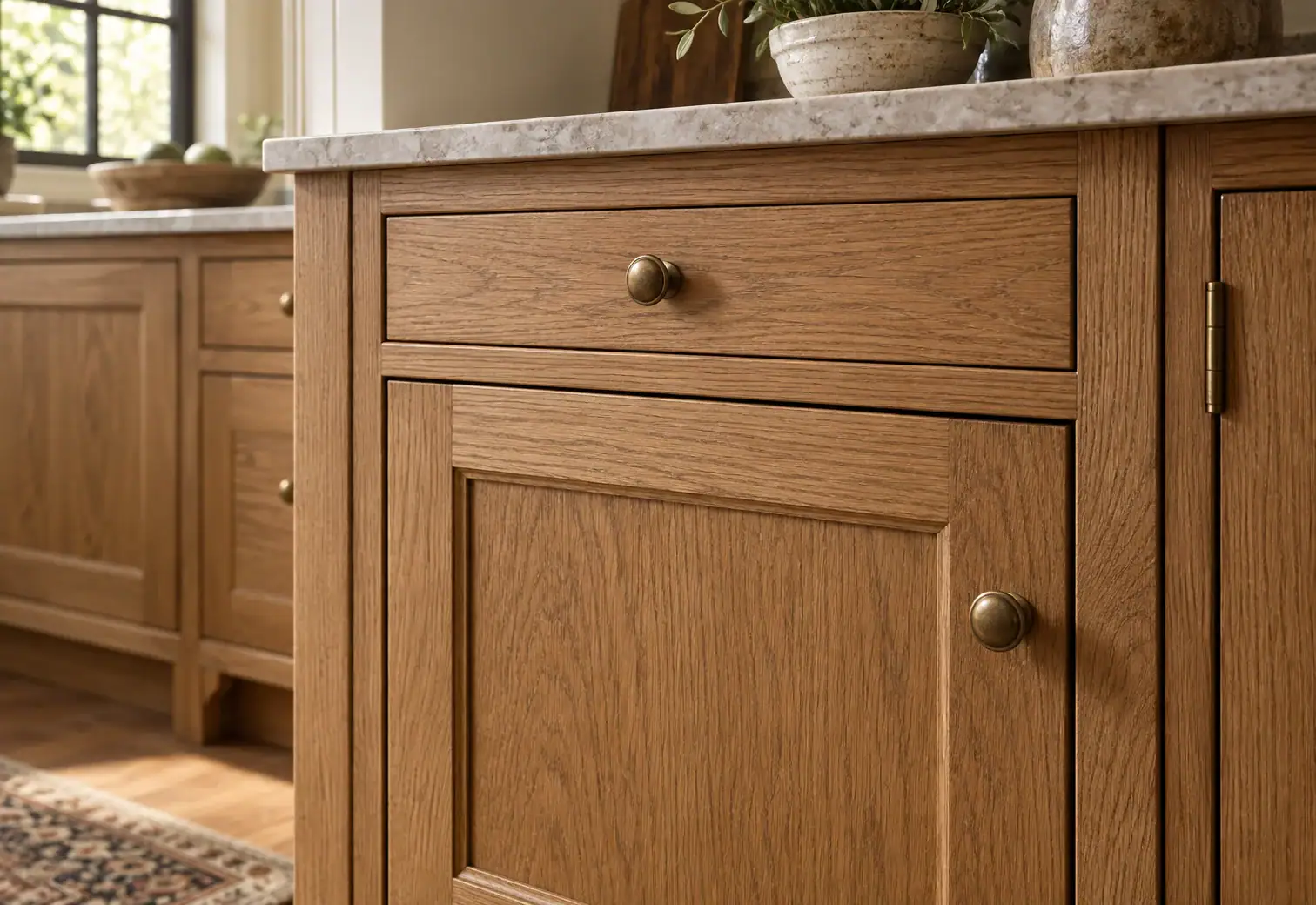
We manufacture our own cabinetry. That means we build each cabinet to the actual measurements of your kitchen — not to a manufacturer’s nearest available size. In a 1960s ranch home in Massapequa or a split-level in Smithtown where no two walls are perfectly parallel, that difference is visible the moment you walk into the finished room. Cabinets that were made for the space look like they’ve always been there. Cabinets that were adapted to fit never quite do.
Kitchen Renovation Contractor New York
What a Full Kitchen Remodel Actually Includes
A complete kitchen remodel involves more moving parts than most homeowners expect going in. There’s the layout planning — deciding what stays, what moves, and what gets removed entirely. There’s the cabinetry, which accounts for 30 to 40 percent of the total project budget and has the single biggest impact on how the finished kitchen looks and functions.
Then comes countertop selection, appliance placement, lighting, and in many Long Island municipalities, building permits that need to be pulled before a single wall comes down.
We handle the full scope of kitchen remodeling services from planning through installation. Because we manufacture our own cabinetry in-house, we can design around your actual space rather than working backward from what’s available. And because we’ve worked across Nassau and Suffolk County, we understand the permitting landscape — the differences between incorporated villages, town building departments, and the inspection requirements that vary from one community to the next. You don’t have to figure that out on your own.
Our Kitchen Remodeling Process Long Island
From First Conversation to Finished Kitchen
In-Home Consultation and Planning
We visit your home, take measurements, and talk through how you use the space — so the design starts with your real kitchen, not a generic floor plan.
Custom Design and Cabinet Build
We design your cabinetry to the exact dimensions of your space and build it in-house — no waiting on manufacturer lead times or settling for standard sizes.
Installation and Final Walkthrough
Our team installs everything and walks through the completed kitchen with you — making sure every detail meets the standard we set at the start.
FREQUENTLY ASKED QUESTIONS
A few more details.
Questions about kitchen remodeling? Start here, or talk to James about your project.
Ask a QuestionHow much does a kitchen remodel typically cost on Long Island?
Kitchen remodel costs on Long Island vary significantly depending on the size of the space, the scope of work, and the quality of materials. Most full kitchen remodels in Nassau and Suffolk County fall somewhere between $35,000 and $85,000 or more. High-end custom kitchens — particularly in communities along the North Shore or in areas with premium home values — can push well beyond that range.
The New York metro area’s average for a midrange kitchen remodel runs around $75,000. Cabinets alone typically account for 30 to 40 percent of the total budget, which is why the quality and fit of your cabinetry has such an outsized impact on both the look of the finished kitchen and the overall value of your investment. We work on a quote basis, so the best way to get an accurate number is to start with a consultation where we can assess your specific space and goals.
Do I need a permit for a kitchen remodel on Long Island?
In most cases, yes — especially if the project involves any changes to electrical, plumbing, or structural elements, which most full kitchen remodels do. Long Island’s permitting environment is more complex than many homeowners expect. Nassau and Suffolk Counties are made up of dozens of incorporated villages and towns, each with their own building department, permit requirements, and inspection processes.
What’s required in Garden City may differ from what’s required in Huntington or Smithtown. Working with a contractor who knows how to navigate this landscape matters. Pulling permits isn’t just a legal requirement — it protects you at resale, ensures the work is inspected and up to code, and gives you recourse if something goes wrong down the line. We understand Long Island’s local permitting requirements and can speak to what your specific project will involve.
What is the difference between custom, semi-custom, and stock kitchen cabinets?
Stock cabinets are pre-built in standard sizes and available off the shelf — they’re the fastest and least expensive option, but they rarely fit a kitchen perfectly, especially in older Long Island homes where walls aren’t always square and dimensions aren’t standard. Semi-custom cabinets give you more finish and style options, but the underlying dimensions are still set by the manufacturer — you’re choosing from a menu, not designing from scratch.
Truly custom cabinetry, like what we build at Sir James Management Corp, is manufactured specifically for your kitchen. Every cabinet is built to the actual measurements of your space. There are no filler strips, no awkward gaps, no corners that almost work. For Long Island homeowners investing in a serious kitchen remodel, the difference between semi-custom and truly bespoke cabinetry is something you’ll see every single day.
How long does a kitchen remodel take from start to finish?
Timelines vary depending on the scope of the project, but a full kitchen remodel — including demolition, cabinetry, countertops, and installation — typically takes several weeks to a few months from the time work begins on-site. The planning and design phase, which includes finalizing measurements and building your cabinetry, happens before the physical work starts.
Because we manufacture our own cabinets in-house rather than waiting on a manufacturer’s production and shipping schedule, we have more control over that part of the timeline than contractors who source from third-party suppliers. We’ll give you a realistic project timeline at the consultation stage and walk you through what to expect at each phase — including how we manage the disruption of living without a functioning kitchen during the work.
How do I know if a kitchen remodeling contractor is properly licensed on Long Island?
Nassau County and Suffolk County both require home improvement contractors to hold county-issued licenses — and they’re separate requirements. Nassau County contractors register with the Nassau County Department of Consumer Affairs; Suffolk County has its own licensing process. A licensed contractor should be able to provide their license number on request, and you can verify it through the relevant county department.
Beyond licensing, make sure any contractor you hire carries general liability insurance and workers’ compensation coverage. In New York, homeowners who hire uninsured contractors can be held personally liable for on-site injuries. Asking for proof of insurance before signing a contract isn’t being difficult — it’s standard practice, and any reputable contractor will have no problem providing it.
Is a kitchen remodel a good investment in the Long Island real estate market?
For most Long Island homeowners, yes — and the math is more favorable here than in most other markets. When your home is worth $700,000 to $1.5 million or more, a kitchen remodel represents a proportionally smaller share of total home value than it would in a lower-cost market, which makes the investment easier to justify.
Nationally, minor kitchen remodels return up to 96 percent of their cost at resale, and kitchen ROI consistently outperforms bathroom remodel ROI. Beyond the numbers, Long Island’s tight real estate market — low inventory, high prices, intense competition — means many homeowners who would otherwise move up are choosing to renovate in place instead. A well-executed kitchen remodel by a licensed contractor with documented craftsmanship is one of the most financially sound decisions a Long Island homeowner can make, whether you’re staying for decades or planning to sell in the next few years.
SERVICE AREAS
Towns we serve.
No towns found for “”.
Custom Kitchen Cabinets
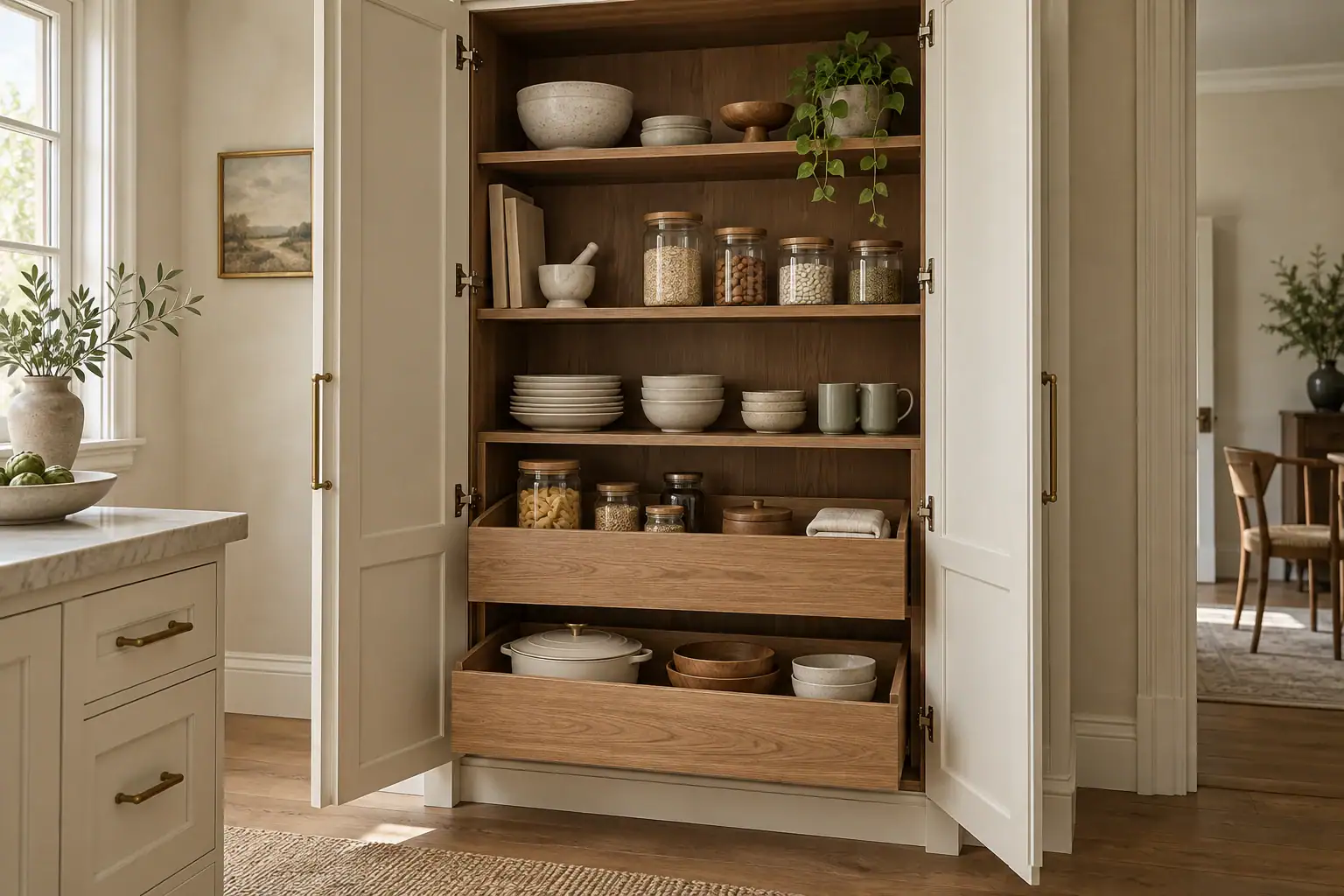
Your kitchen has its own dimensions, its own quirks, its own story. We build custom kitchen cabinets on Long Island that fit…
Explore Service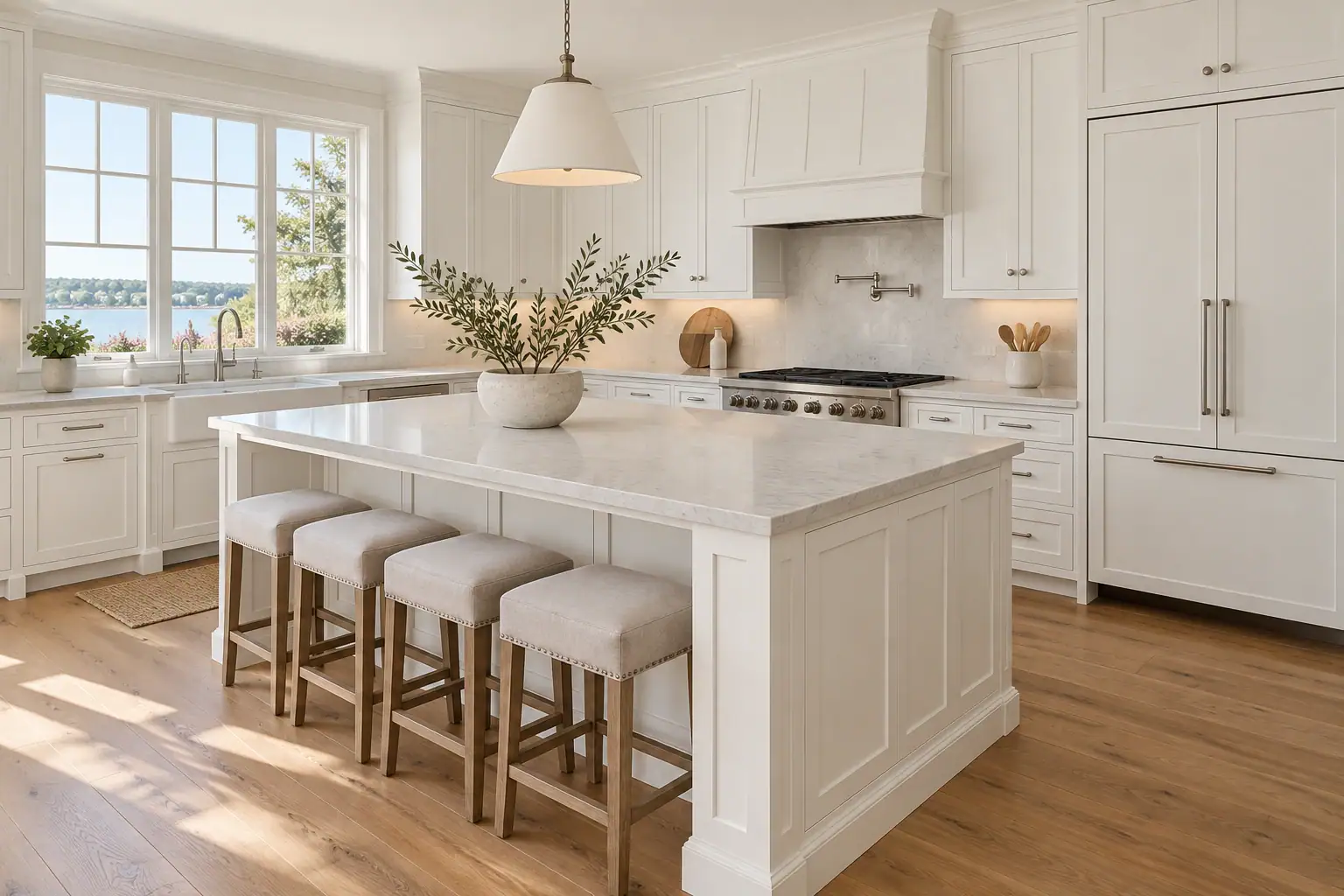
Custom Kitchen Island
Most Long Island kitchens weren't designed for the way people actually live today. We build custom kitchen islands that fit your exact…
Explore Service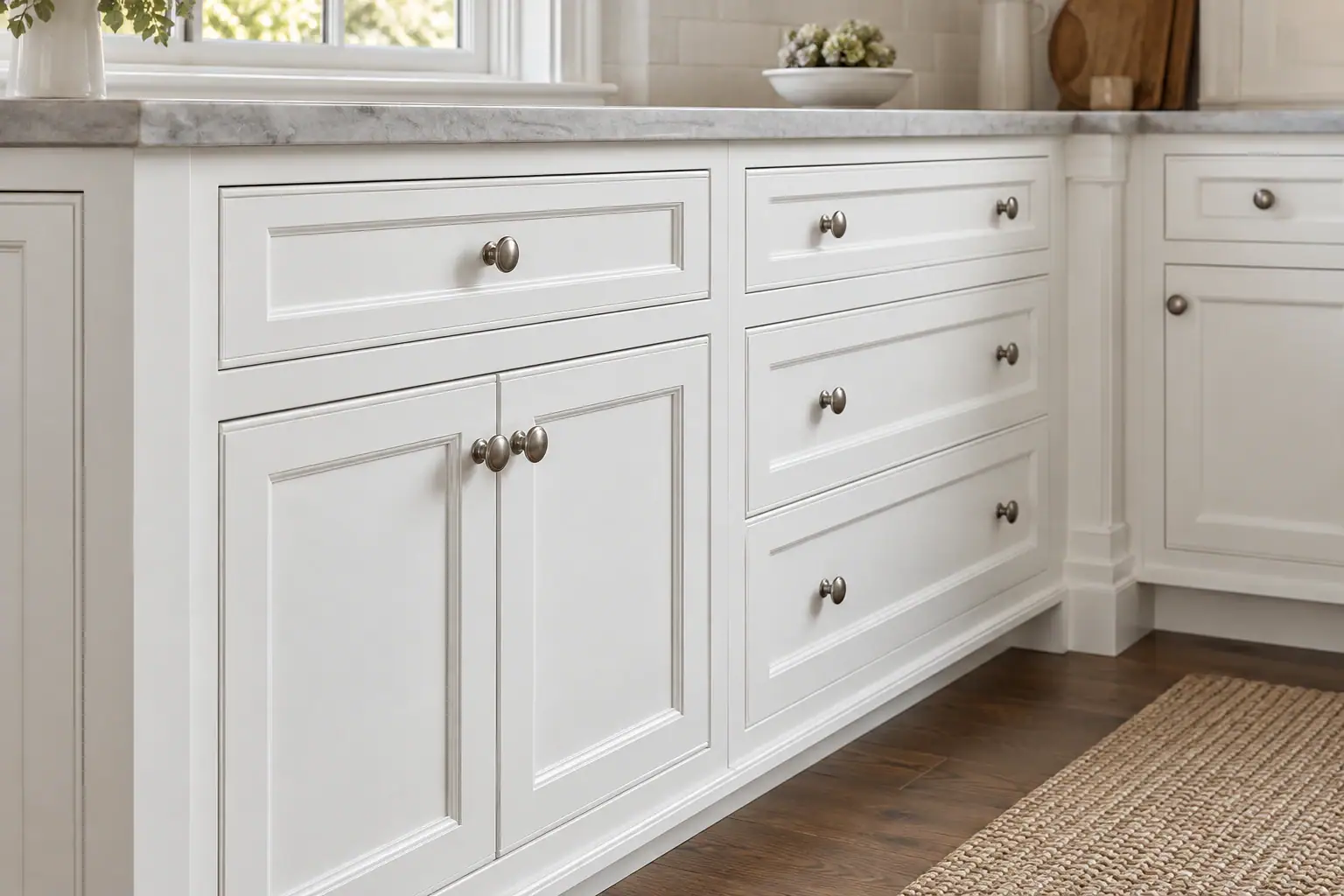
Kitchen Cabinet Refacing
Custom-manufactured kitchen cabinet refacing services for Long Island homeowners who want craftsmanship, not a catalog option. Your kitchen. Built to order.
Explore Service