Custom Cabinetry in Huntington Station, NY
Built for the Home You've Spent Decades Earning
Your Huntington Station home has appreciated dramatically custom cabinetry from us makes sure the inside reflects that.
- Owner on site
- Industry experience since 1993
- Based in West Babylon
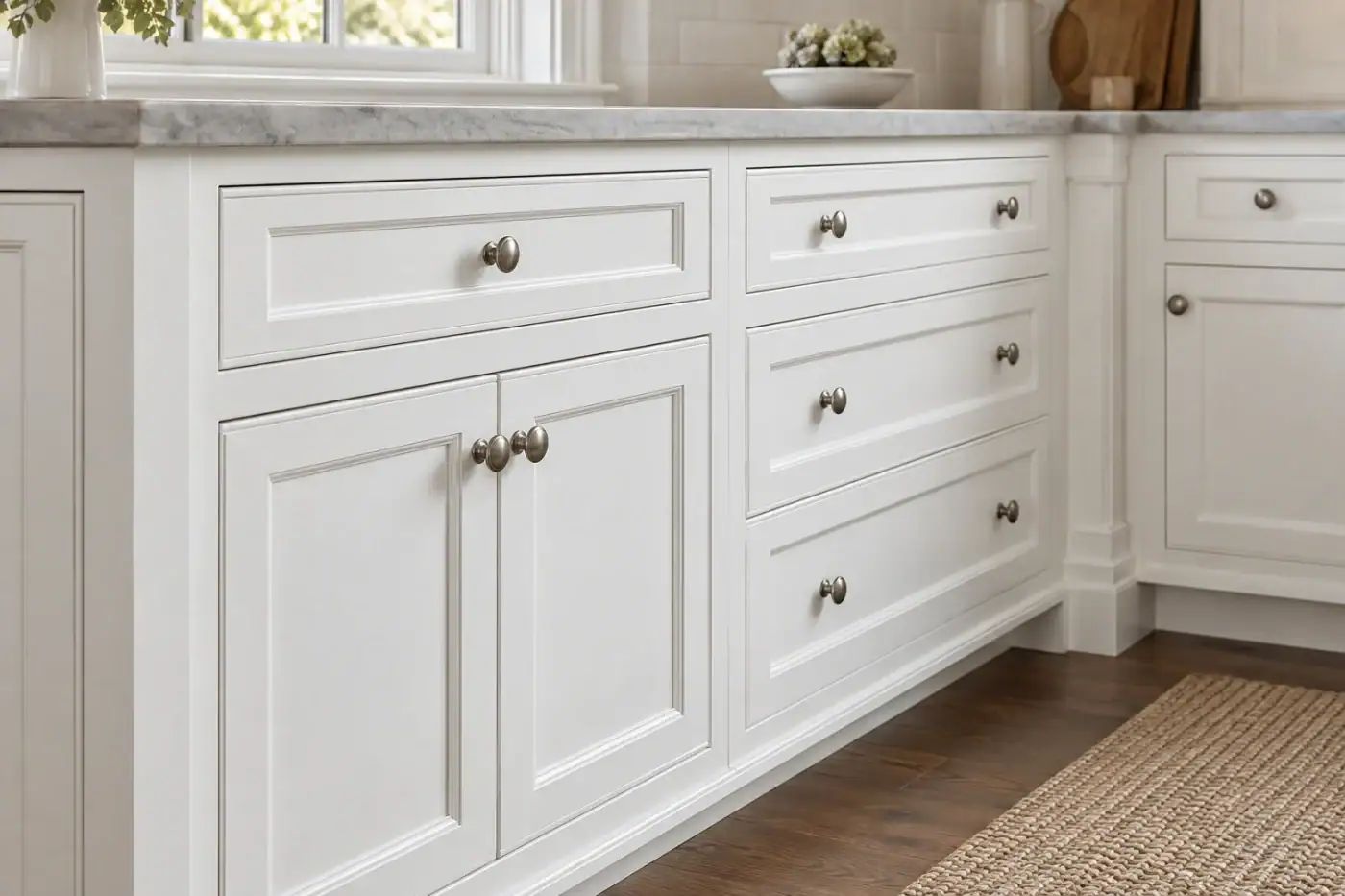
Custom Cabinet Company Huntington Station NY
A Kitchen That Finally Fits Your 1950s Cape Cod or Split-Level
Most of the homes in Huntington Station were built between the 1930s and 1960s Cape Cods, hi-ranches, split-levels, and ranch homes designed around the spatial logic of a completely different era. The kitchens in those homes weren’t built to accept modern stock cabinets. The dimensions don’t line up, the corners don’t cooperate, and no catalog product accounts for the quirks of a floor plan that’s been standing since 1952.
When you try to force standard cabinetry into a non-standard space, you end up with filler strips, awkward gaps, and a kitchen that looks like it was retrofitted because it was.
Custom cabinetry built to the exact measurements of your specific room changes that entirely. We manufacture every cabinet to 1/16th of an inch, which means your kitchen works with the architecture of your home instead of fighting it. Every inch of space is used. Nothing looks like it was crammed in.
There’s also the long-term reality to consider. Median home values in Huntington Station have risen from around $183,500 in 2000 to over $625,000 today. That’s a home worth protecting. Custom cabinetry built with quality materials and proper construction holds up for 20 years or more through Long Island’s humid summers, dry forced-air winters, and everything in between. That kind of lifespan matters in a home worth what yours is worth.
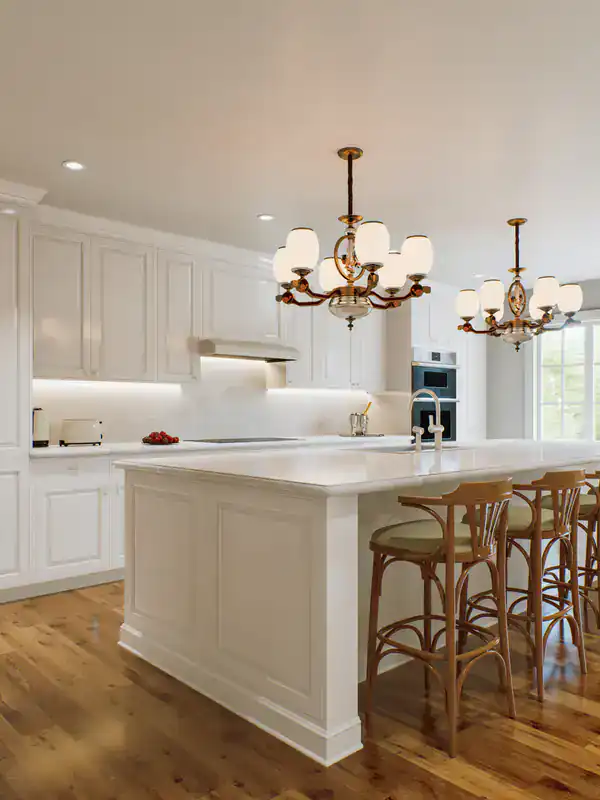
Custom Cabinet Maker Huntington Station NY
We Manufacture In-House That's the Difference
Sir James Management Corp is a custom cabinetry manufacturer based in Springfield Gardens, Queens. We don’t order cabinets and install them we build them. That distinction matters more than most people realize, because when fabrication happens in-house, quality is controlled at every stage, from material selection through the final installation. There’s no outsourced production, no mystery materials, and no gap between what was promised and what shows up.
Huntington Station homeowners who commute into the city via the LIRR understand what it means to work with a New York City metro operation. The standard is different. We bring that standard directly to western Suffolk County, serving both residential clients renovating postwar Long Island homes and commercial operators fitting out spaces along the Route 110 corridor from medical offices and retail buildouts near Walt Whitman Road to specialty residential projects throughout the Town of Huntington.
We cover kitchens, bathrooms, closets, and unique home spaces, as well as commercial environments that demand more than stock cabinetry can offer. One manufacturer, one consistent standard, from the first consultation through the final installation.
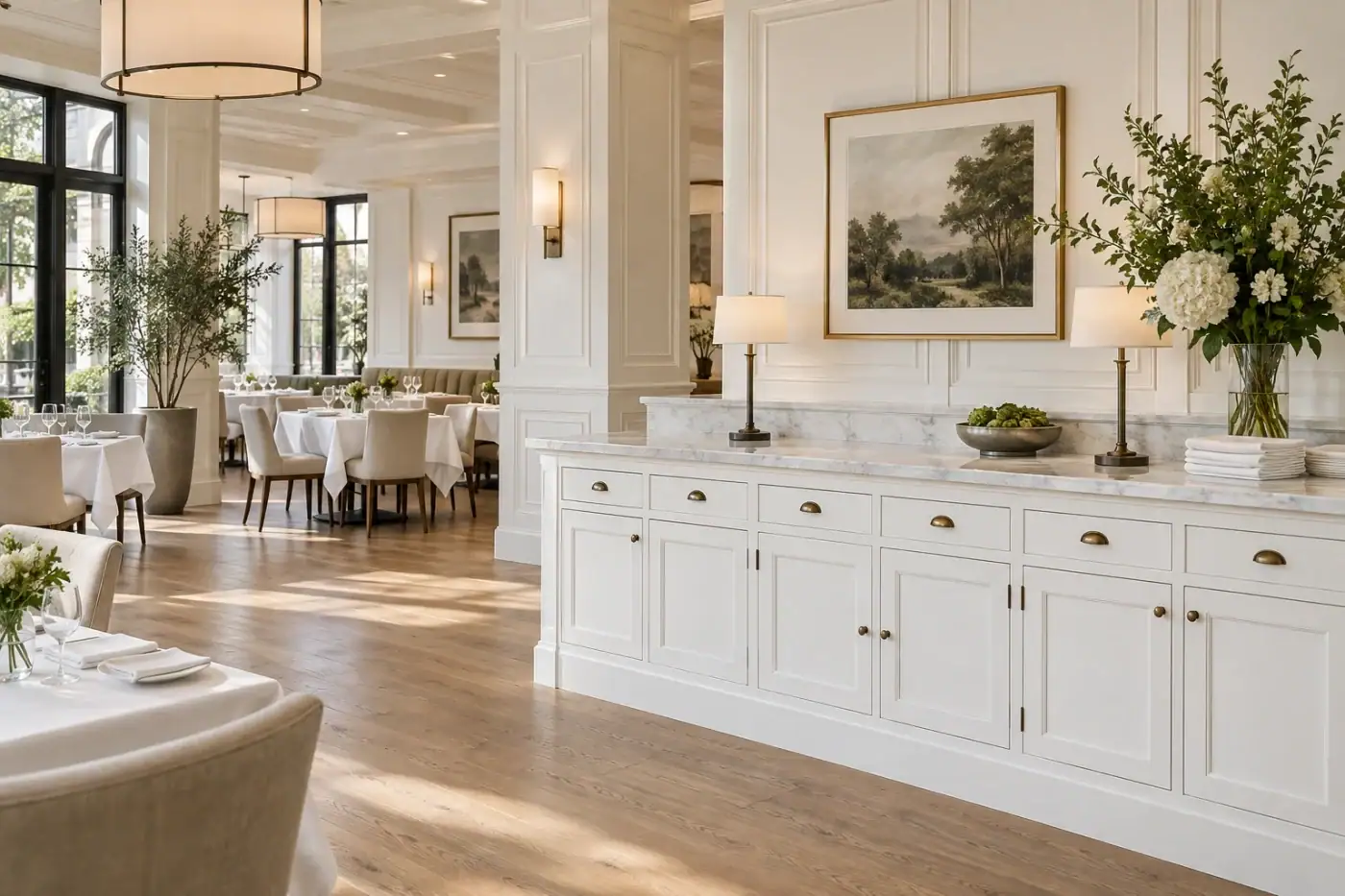
Custom Millwork Company Huntington Station NY
From Your Floor Plan to Finished Cabinets No Gaps
It starts with a consultation where the focus is entirely on your space what you need, how you use it, and what the room’s actual dimensions are. For homes in Huntington Station, that on-site measurement step is especially important. A 1950s Cape Cod on the North Shore doesn’t conform to the assumptions built into a stock cabinet catalog, and getting the measurements right from the beginning is what prevents every problem that comes later.
From there, we produce shop drawings and review them with you before a single piece of material is cut. That approval step is where you confirm that what’s being built matches what you had in mind not after fabrication, not after delivery, but before. Once drawings are approved, fabrication begins in-house. Because we manufacture our own cabinetry, the process doesn’t depend on a third-party shop hitting a deadline.
For projects in Huntington Station, it’s also worth knowing that cabinetry installation work falls under the Town of Huntington Building Department’s jurisdiction. Depending on the scope of your project, a residential alteration permit may be required. Working with a full-service manufacturer that manages the process from design through installation means you have one point of accountability and a company that understands how local requirements factor into the timeline.
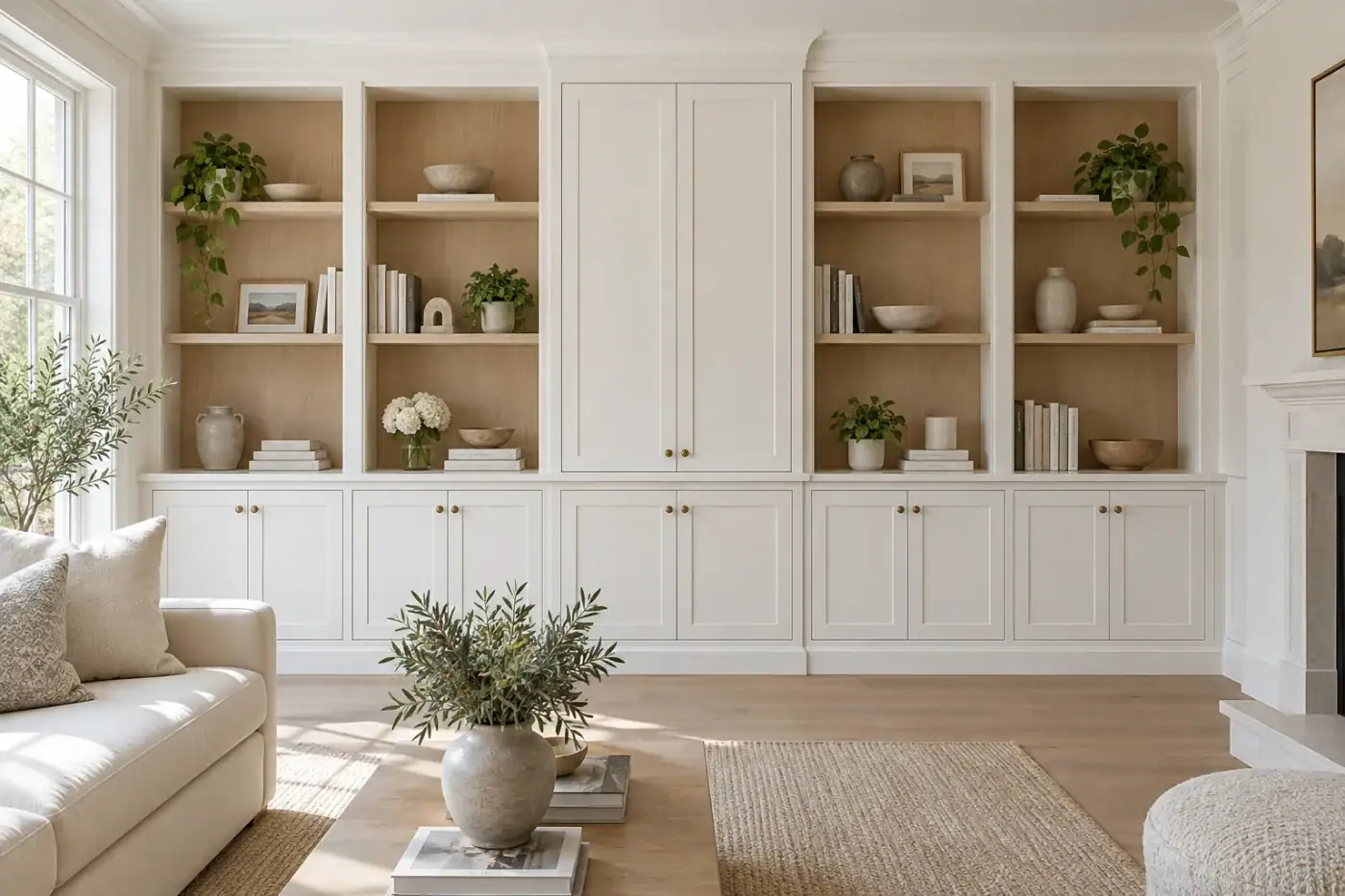
Commercial Cabinetry Huntington Station NY
Every Space Covered Residential and Commercial in Huntington Station
We manufacture custom cabinetry for kitchens, bathrooms, closets, and specialty home spaces and for commercial environments that need more than what a stock product line can deliver. For Huntington Station’s residential market, that means bespoke kitchen cabinets built around the actual dimensions of your home, bathroom cabinetry that maximizes every inch of a room that was never designed for modern storage demands, and custom closet systems that work the way you actually live.
On the commercial side, Huntington Station is in the middle of a documented revitalization. The $10 million Downtown Revitalization Initiative grant, the $75 million redevelopment of the Huntington Shopping Center on Walt Whitman Road, and the ongoing medical and retail buildout along Route 110 are generating real demand for commercial cabinetry and millwork reception areas, exam room cabinetry, retail display fixtures, break rooms, and specialty built-ins that reflect the brand identity of the business occupying the space. Generic commercial cabinetry doesn’t do that job.
Whether the project is a kitchen in a 1960s split-level near South Huntington or a medical office suite on the Route 110 corridor, the approach is the same: built to spec, manufactured in-house, and installed without the coordination failures that come from working with multiple vendors. No named service tiers, no catalog constraints just cabinetry designed and built for your specific space.
Questions from Huntington Station
A few things you may be wondering
Will custom cabinets actually fit the older homes in Huntington Station?
This is one of the most common concerns for homeowners in Huntington Station, and it’s a legitimate one. The postwar housing stock here Cape Cods, hi-ranches, split-levels, ranch homes built between the 1930s and 1960s was constructed to the spatial logic of a different era. Kitchens in these homes often have non-standard dimensions, irregular corners, and layouts that don’t conform to the 3-inch increments that stock and semi-custom cabinets are built around.
That’s exactly where custom cabinetry has a practical advantage over anything you’d pull from a catalog. We take on-site measurements of your actual space before anything is designed or fabricated. Shop drawings are produced based on those measurements and reviewed with you before production begins. The result is cabinetry built to 1/16th of an inch designed around your home’s real dimensions, not around what a manufacturer decided was standard decades ago. No filler strips, no awkward gaps, no compromises forced by a catalog’s limitations.
How long does it take to get custom cabinets made and installed?
For residential projects in Huntington Station, the typical timeline from approved shop drawings to completed installation runs roughly 6 to 12 weeks. That lead time exists because the cabinets are being manufactured specifically for your space not pulled from inventory. It’s a longer wait than buying stock cabinets, but the comparison isn’t really fair. Stock cabinets are built to approximate dimensions and shipped in a few weeks. Custom cabinets are built to your exact floor plan and fabricated from scratch.
For commercial projects a medical office buildout along Route 110, a retail space in the Huntington Shopping Center area, a restaurant fitting out a new location the timeline typically runs 12 to 18 weeks depending on scope and complexity. If you’re planning around a specific opening date or a renovation that involves other contractors, the most important thing you can do is start the process early. The lead time is predictable; what causes problems is starting the conversation too late. For Huntington Station homeowners planning a spring renovation, that means reaching out in late winter to stay on schedule.
What's the difference between custom cabinets and what I'd buy at a big-box store?
The most obvious difference is fit. Stock cabinets come in fixed sizes, and the space between those sizes gets filled with filler strips visible reminders that the cabinets weren’t built for your room. In a 1950s or 1960s home in Huntington Station, where kitchens were designed around the appliances and habits of a different generation, that mismatch is even more pronounced. Custom cabinets are built to the exact dimensions of your space, so there are no filler strips and no wasted inches.
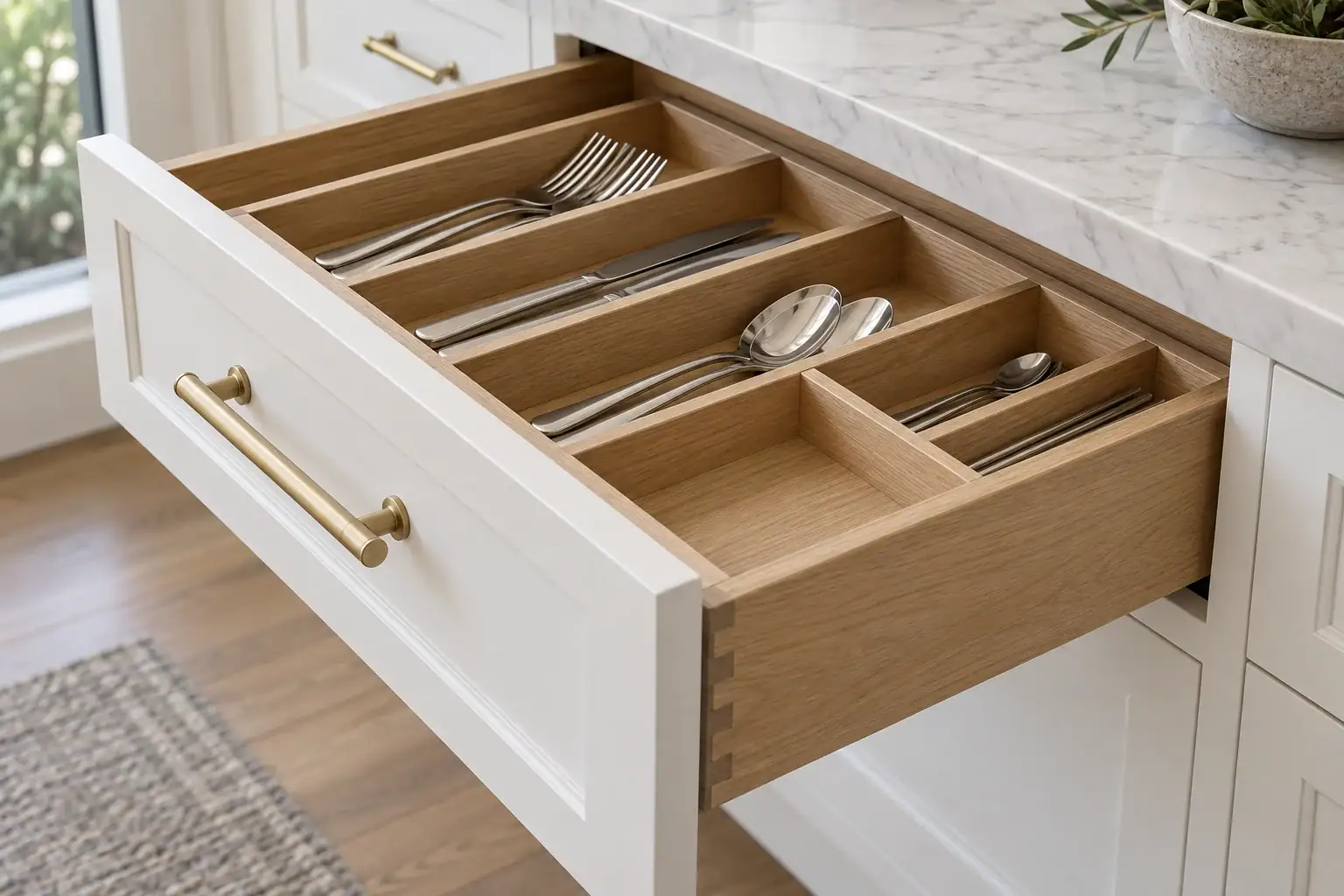
The less visible difference is construction. Quality custom cabinetry uses plywood box construction rather than particleboard, dovetail drawer joints rather than stapled connections, and full-extension soft-close drawer hardware rather than the basic slides that come standard in budget cabinets. These construction details determine whether your cabinets look the same in 25 years or start showing wear in 7. On Long Island’s North Shore, where summer humidity and dry winter heating cycles create real seasonal stress on lower-quality materials, that construction difference isn’t just aesthetic it’s structural.
Do you handle commercial cabinetry projects in Huntington Station, NY?
Yes. We serve both residential and commercial clients in Huntington Station and the surrounding areas of the Town of Huntington. On the commercial side, that includes medical offices, retail spaces, restaurants, professional service environments, and specialty commercial buildouts the kinds of projects where stock cabinetry simply doesn’t meet the durability, specification, or brand requirements of the business.
Huntington Station is an especially active commercial market right now. The $10 million Downtown Revitalization Initiative grant, the completed $75 million redevelopment of the Huntington Shopping Center on Walt Whitman Road, and ongoing medical and professional office development along the Route 110 corridor are all generating demand for commercial cabinetry and millwork that reflects the quality of the spaces being built. Commercial cabinetry from us is manufactured in-house to the durability standards that daily commercial use demands not sourced from a stock catalog and installed with generic hardware. If you’re fitting out a new or renovated commercial space in Huntington Station, the process starts the same way as a residential project: with a consultation focused on your specific space, your timeline, and what the finished environment needs to accomplish.
How does Long Island's climate affect which cabinets I should choose?
Long Island’s climate is humid continental with a maritime influence hot and humid summers, cold winters, and a meaningful seasonal swing in indoor humidity driven by forced-air heating systems. For homes on the North Shore near the Long Island Sound, ambient humidity levels can run higher than inland areas, which adds additional stress to cabinet materials over time.
Particleboard and MDF cores absorb moisture. Over multiple cycles of summer humidity and winter dry heat, that absorption causes swelling, warping, and joint failure especially around sinks, dishwashers, and exterior walls where temperature and humidity fluctuate most. Plywood box construction is significantly more stable in these conditions because it resists moisture absorption and holds its structural integrity through seasonal changes. The finishing process also matters properly sealed surfaces slow moisture infiltration in ways that cheaper finishes don’t. If you’ve had cabinets in a Huntington Station home before and noticed doors that stick in summer or joints that crack in winter, that’s the climate doing exactly what it does to lower-quality construction. Choosing custom cabinetry built with the right materials for this environment is how you avoid repeating that experience.
Is custom cabinetry worth the cost for a home in Huntington Station?
For most homeowners in Huntington Station, the answer is yes and the math is straightforward. Median home values here have risen from around $183,500 in 2000 to over $625,000 today. That’s a home worth a meaningful investment in quality. Custom cabinetry built with proper materials and construction lasts 20 years or more. Budget-grade stock cabinets typically show significant wear in 7 to 10 years. When you spread the cost difference across that lifespan, the gap narrows considerably.
There’s also the fit issue specific to this housing market. In a postwar home a Cape Cod, a split-level, a hi-ranch built in the 1950s or 1960s stock cabinets require filler strips and workarounds that are visible every day. Custom cabinetry built to the actual dimensions of your kitchen doesn’t have that problem. It looks like it belongs there because it was built for that exact space. Huntington Station homeowners who commute into New York City and shop along the Walt Whitman Road corridor are accustomed to knowing the difference between quality and its imitation. Custom cabinetry from us is the version of that standard brought into your home not a showroom floor, not a catalog page, but your specific kitchen, bathroom, or closet built the way it should have been from the start.
More ways we can help
Other services in Huntington Station