Custom Cabinetry in East Hampton, NY
Built for Salt Air, Historic Walls, and Hamptons Standards
Custom cabinetry in East Hampton has to survive more than daily use it has to hold up in a coastal environment that eats through lesser materials fast.
- Owner on site
- Industry experience since 1993
- Based in West Babylon
Custom Cabinet Company East Hampton NY
Cabinets Built to Last in East Hampton's Coastal Environment
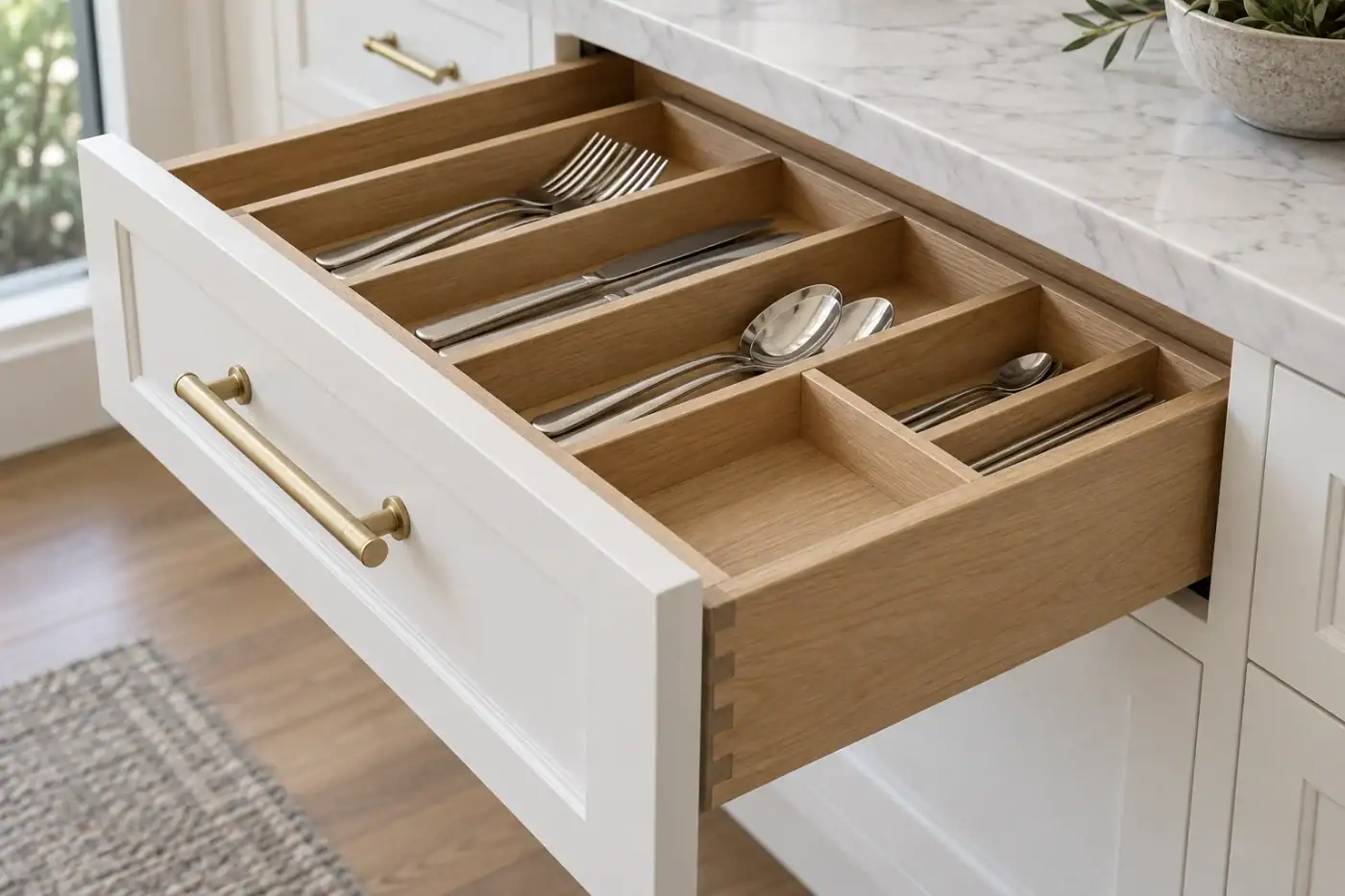
East Hampton is surrounded by water on three sides the Atlantic to the south, Gardiner’s Bay to the north, and open ocean at Montauk to the east. That persistent coastal humidity and salt air does real damage to interior materials over time. Particleboard cabinet boxes absorb moisture, swell, and start to fall apart in coastal conditions well before their expected lifespan.
If you’ve watched a kitchen renovation deteriorate in five or six years because the cabinets couldn’t handle the environment, you already know this problem firsthand. Custom cabinetry built with solid plywood boxes and premium finishes isn’t a luxury preference in East Hampton it’s the practical choice for a home that sits in salt air year-round. In a market where the median property value is $2 million, the materials inside your home should match the investment you’ve made in it.
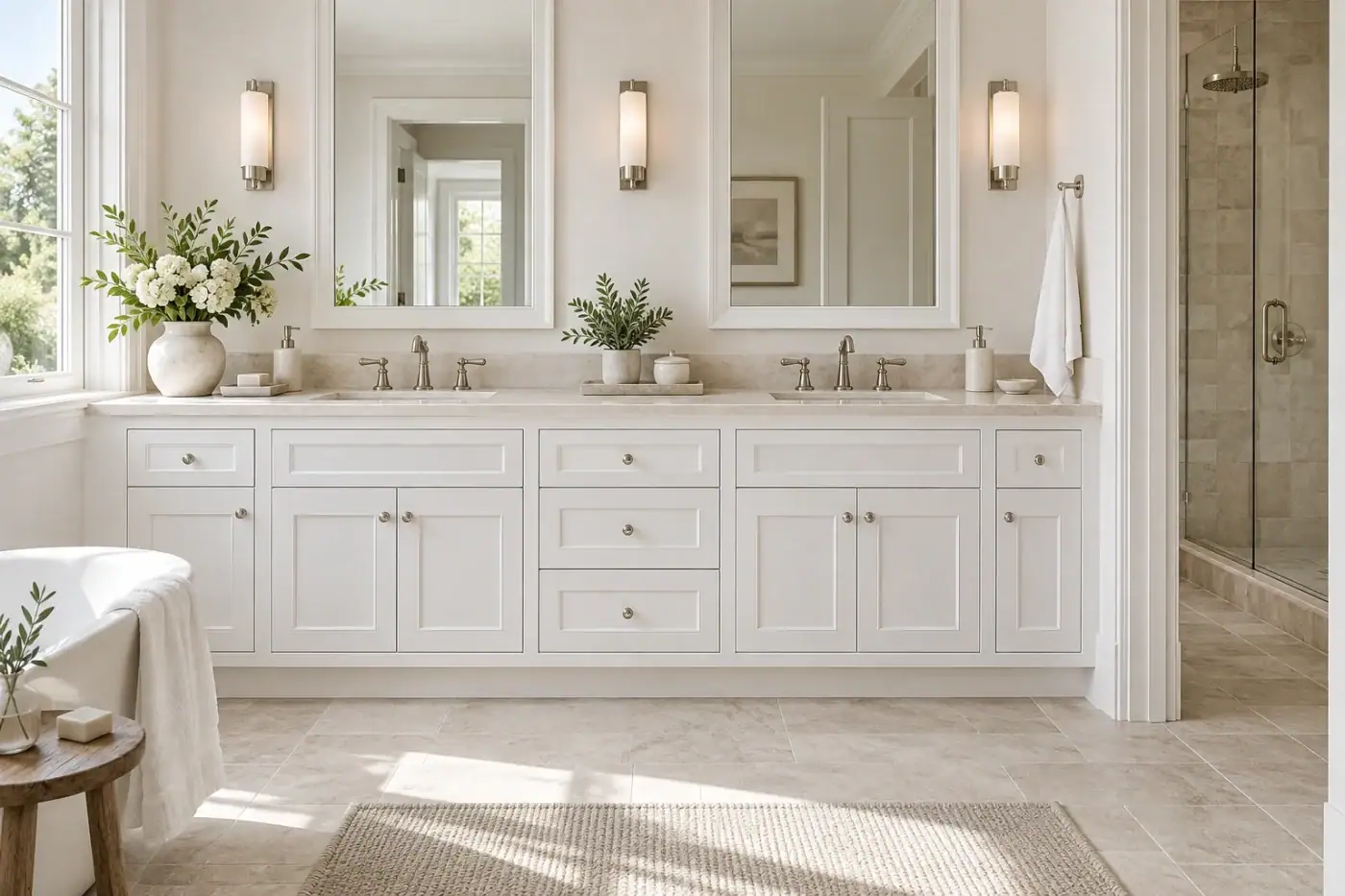
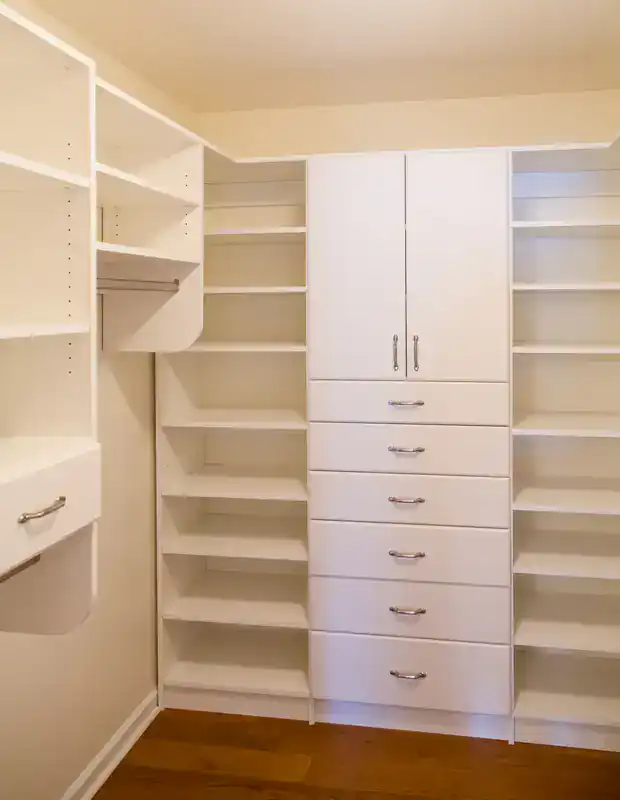
There’s also the issue of space. The Village of East Hampton has homes dating back to 1648 saltbox colonials, shingle-style houses, Colonial Revival structures with sloped walls, irregular ceiling heights, and dimensions that were never designed around a stock cabinet catalog. True custom fabrication, built to the exact measurements of your specific room, eliminates the filler strips and visual compromises that stock cabinetry forces into historic spaces. Every inch of your kitchen, bathroom, or closet is used not patched over.
Custom Millwork East Hampton NY
We Manufacture In-House No Middleman, No Factory Delays
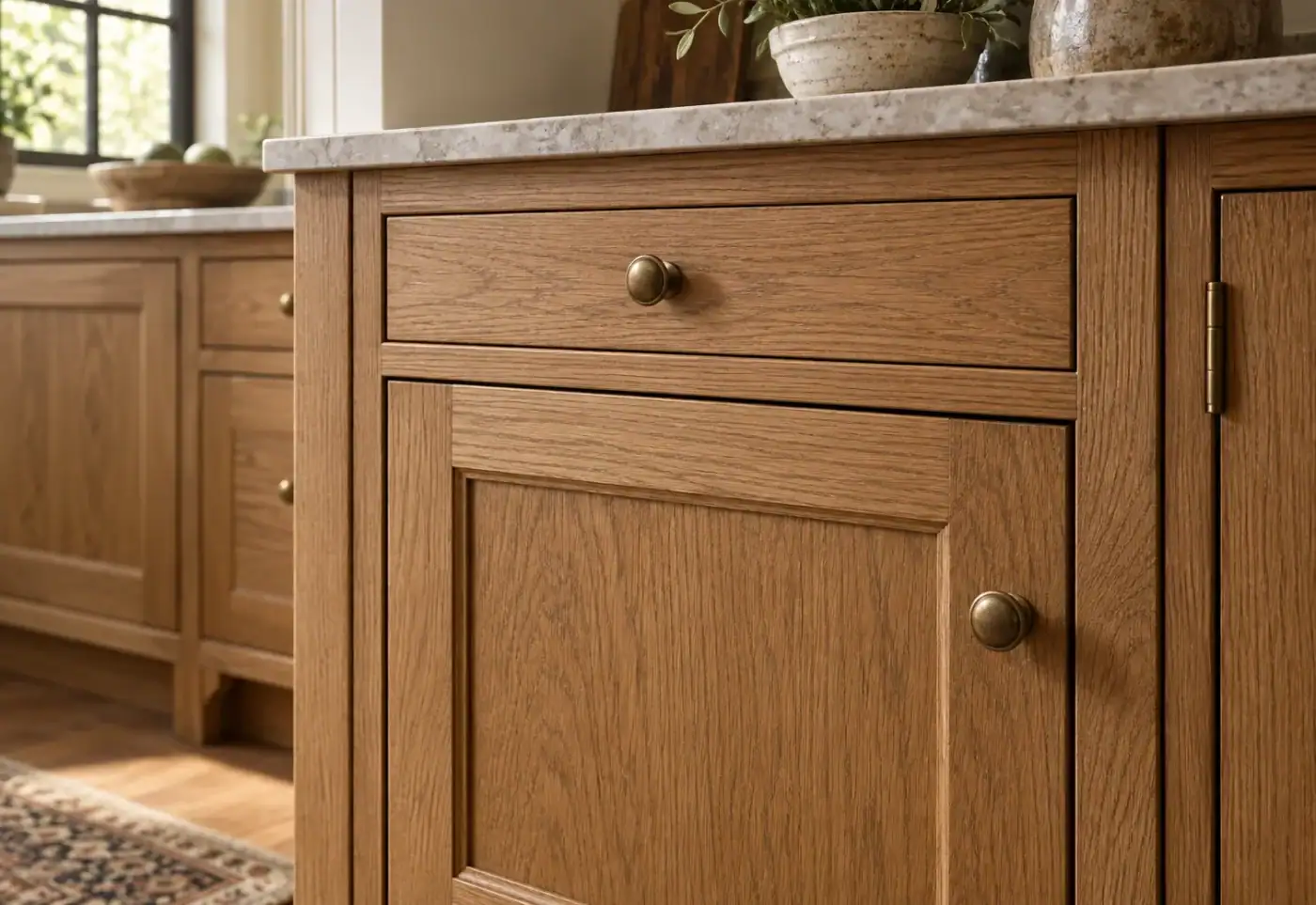
Sir James Management Corp is a New York-based custom cabinetry manufacturer. That word manufacturer matters. We don’t order cabinets from a factory and install them. We build them in-house, which means quality is controlled at every stage, from material selection through fabrication to the final installation in your home or commercial space.
We serve both residential and commercial clients across the New York metro area, including East Hampton and the broader Hamptons market. Whether you’re renovating a historic home off Egypt Lane, updating a property in Wainscott, or outfitting a new commercial space on Newtown Lane, we build to the specific demands of the space not to a catalog.
Our positioning is straightforward: high-end, bespoke cabinetry for clients who expect the work to match the caliber of the property. That’s exactly the standard East Hampton requires.
Custom Cabinet Maker East Hampton NY
From First Measurement to Final Installation No Surprises
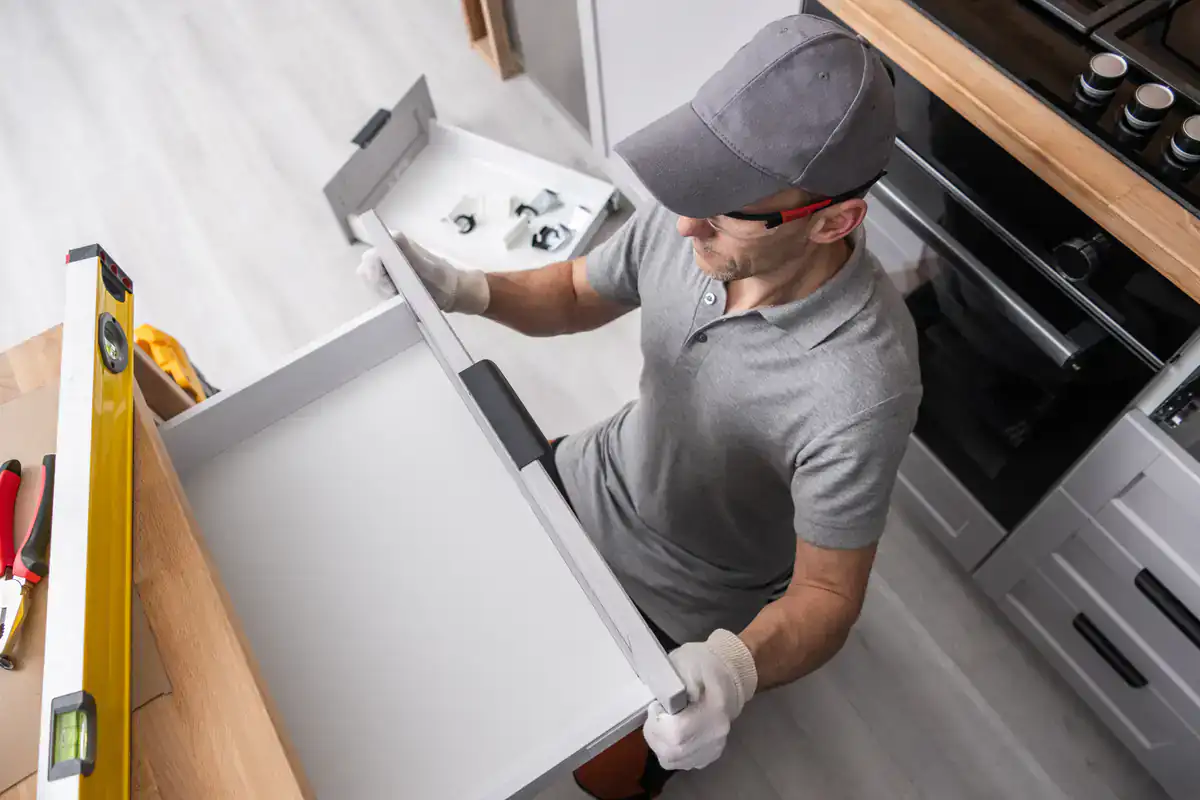
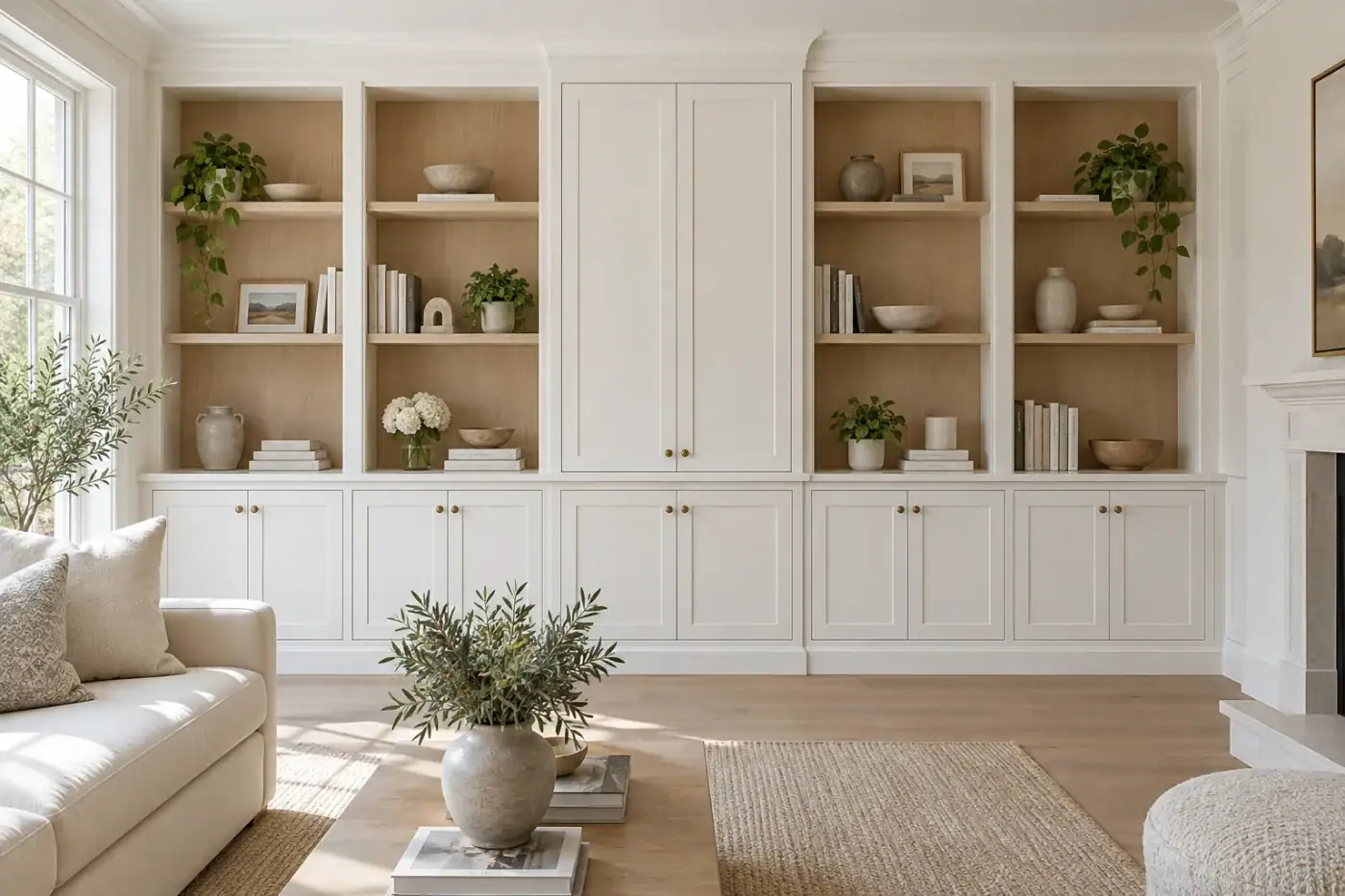
The process starts with an on-site consultation and measurement. Not dimensions you provide from memory an actual visit to the space, because the difference between a saltbox colonial in the Village of East Hampton and a newer construction in Springs isn’t just aesthetic. Ceiling heights, wall angles, and decades of renovation layering all affect how cabinets need to be built to fit correctly.
From there, we create shop drawings before a single piece of material is cut. You see exactly what’s being built and approve it before fabrication begins. This step matters more than most people realize it’s where the gap between what was promised and what gets delivered either closes or widens. With shop drawings in hand, there’s a written record of the design, the dimensions, and the specifications.
Fabrication happens in-house. Once complete, delivery and installation are coordinated around your schedule. For East Hampton’s second-home owners, that often means working within the off-season window fall through early spring to have everything finished and ready before the Memorial Day opening. Custom cabinetry carries a 6 to 12 week fabrication lead time for residential work, so planning ahead isn’t just helpful, it’s essential if you want the kitchen done before summer. Because we manufacture our own cabinets, the timeline stays in-house rather than depending on a third-party factory.
Commercial Cabinetry East Hampton NY
Residential, Commercial, and Everything In Between
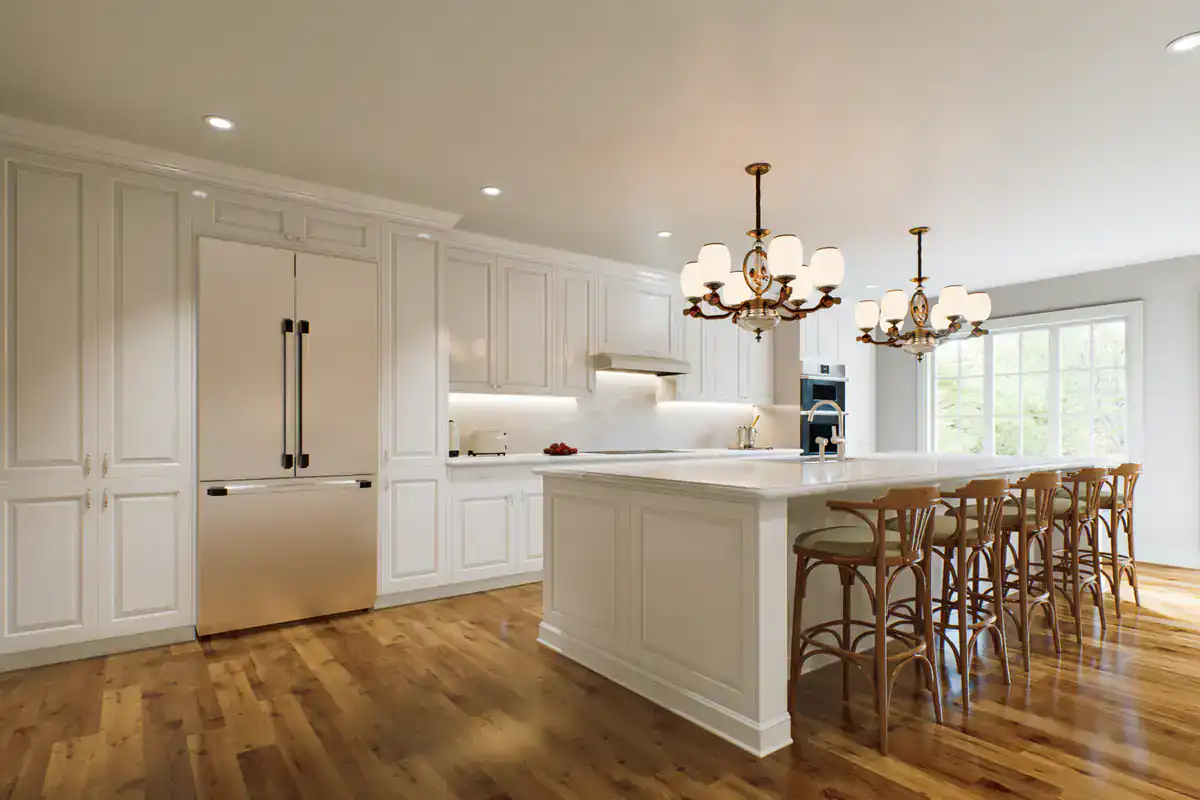
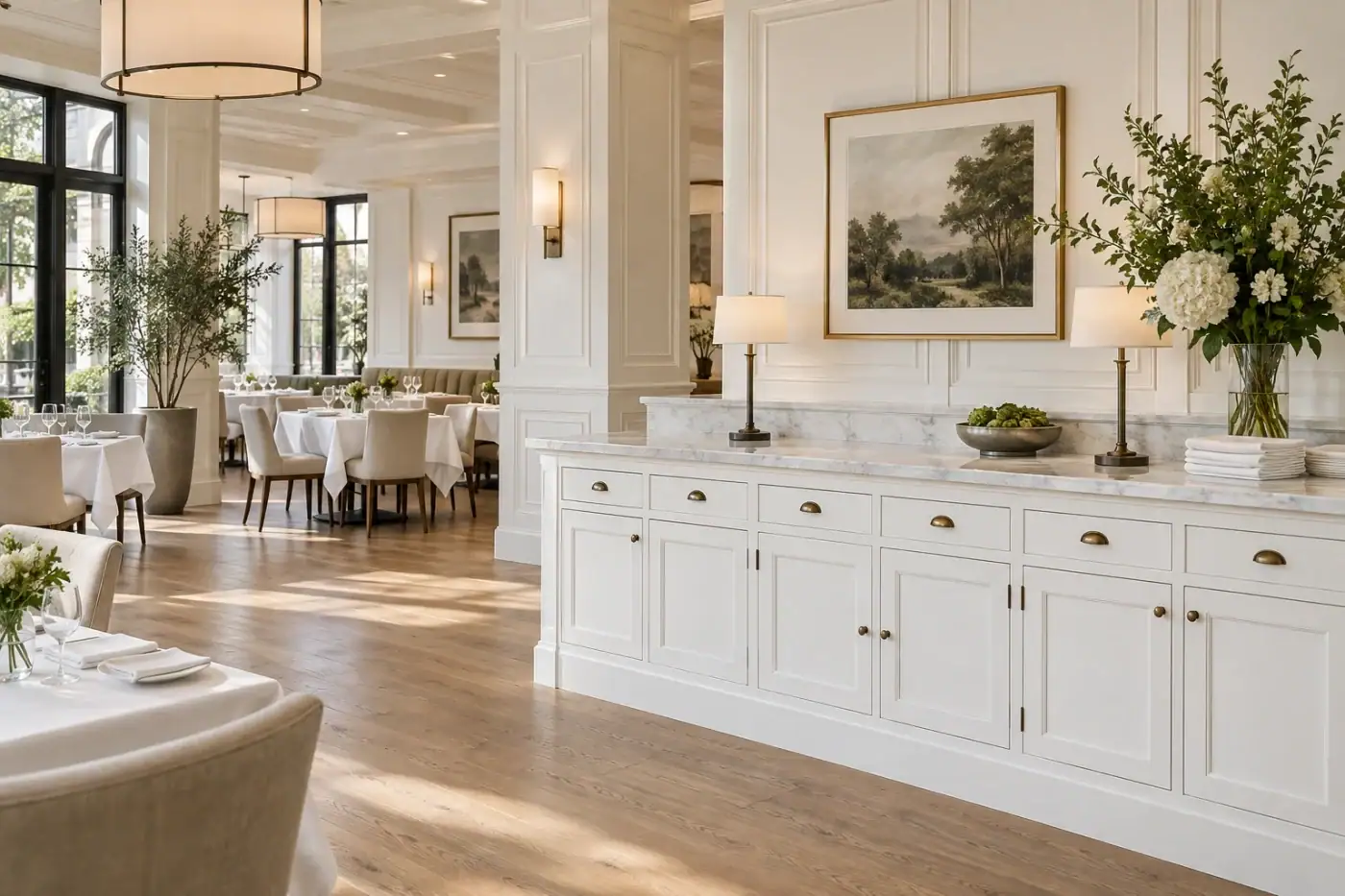
We build custom cabinetry for kitchens, bathrooms, closets, and specialty spaces and extend that same manufacturing capability to commercial clients. That dual scope is relevant in East Hampton, where the residential and commercial markets both operate at a high standard.
On the residential side, our work covers everything from full kitchen renovations in historic village homes to custom bathroom vanities, walk-in closets, and built-ins in properties across Amagansett, Wainscott, Springs, and Montauk. Each project is bespoke meaning it starts with your space and your design, not a modified version of something from a product line.
On the commercial side, East Hampton’s market has specific requirements that generic cabinetry can’t meet. The Town’s Architectural Review Board evaluates commercial permits against a colonial-era heritage standard, which means commercial millwork and cabinetry in village locations needs to be designed with that context in mind. Restaurants and retail spaces on Newtown Lane, hospitality venues in Montauk, and the growing healthcare corridor anchored by the Stony Brook East Hampton Emergency Department at 400 Pantigo Place these are environments where commercial cabinetry has to hold up to daily use and look like it belongs. Our commercial cabinetry and millwork is built for that level of demand, not adapted from a residential line.
Questions from East Hampton
A few things you may be wondering
Why do custom cabinets make more sense than stock in East Hampton's coastal environment?
The short answer is durability. East Hampton sits in a persistently humid, salt-air environment surrounded by the Atlantic Ocean, Gardiner’s Bay, and the open ocean at Montauk. Stock cabinets and many semi-custom lines use particleboard for the cabinet box, which is the structural shell behind the door. Particleboard absorbs moisture. In a coastal environment, that means swelling, delaminating, and structural failure well before the 20-plus year lifespan you’d expect from a quality installation.
Custom cabinets built with solid plywood boxes handle humidity significantly better. Plywood’s cross-grain construction resists moisture absorption and holds fasteners more securely over time. When you add a moisture-resistant finish and quality hardware the kind that doesn’t corrode in salt air you get a cabinet that actually lasts in this environment. For a property valued at $2 million or more, the cost difference between stock and custom becomes a lot less significant when you’re calculating how many times you’d have to replace the cheaper option.
How far in advance should I plan a custom cabinetry project for my East Hampton home?
For residential custom work, plan on a 6 to 12 week fabrication window from the time shop drawings are approved. That’s fabrication alone before delivery and installation are scheduled. If you’re managing a second home and want the project finished before Memorial Day weekend, you need to be working backward from that date and accounting for the full timeline.
The practical implication for East Hampton’s second-home owners is significant. If your target is a May opening, an order placed in late February is cutting it close. January is more comfortable. The off-season renovation window roughly September through March is when most East Hampton owners schedule interior work, both because the home is unoccupied and because contractors are more available than during the summer rush. The earlier you start the conversation, the more realistic your timeline becomes. Because we manufacture our own cabinets, the schedule doesn’t depend on a factory backlog outside anyone’s control.
Can you build custom cabinetry for a historic home in the Village of East Hampton?
Yes, and it’s actually where custom fabrication makes the most practical sense. The Village of East Hampton has homes dating back to 1648 saltbox colonials, Colonial Revival structures, shingle-style houses many of which sit within named historic districts like Egypt Lane and Briar Patch Road. These homes have irregular ceiling heights, sloped walls, and room dimensions that were never designed around the 3-inch increments of a stock cabinet catalog.
Stock cabinets require filler strips when the space doesn’t match a standard size. In a kitchen with a 93-inch ceiling and a 96-inch cabinet, you’re either leaving a gap or adding a filler piece that announces itself as a workaround. Custom fabrication eliminates that entirely. We build the cabinets to the exact dimensions of your specific room measured on-site, drawn up in shop drawings, and fabricated to fit. The result looks like the cabinets were always part of the house, because they were designed specifically for it.
What's the difference between custom cabinetry and semi-custom, and does it matter for my project?
Semi-custom cabinets are factory-produced lines with a limited range of modifications you can choose from available sizes, finishes, and configurations, but you’re still working within the manufacturer’s catalog. They ship faster and cost less than true custom, but they come with constraints. If your space doesn’t match the available sizes, you’re using filler pieces. If you want a specific wood species, finish, or configuration that’s not in the line, you’re out of luck.
True custom cabinetry starts with your space and your design. There’s no catalog. The dimensions, the materials, the construction method, the hardware all of it is specified for your project. For East Hampton’s market, where homes are architecturally complex and buyers expect a finished product that looks intentional rather than adapted, the difference matters. Semi-custom can work in a straightforward, newer-construction space with standard dimensions. In a historic village home, a Wainscott estate, or a commercial space on Newtown Lane where the design has to meet ARB standards, custom fabrication is the option that actually delivers what you’re looking for.
Does Sir James Management Corp handle commercial cabinetry projects in East Hampton?
Yes. We’re set up for both residential and commercial work, and the commercial side covers the full range of applications restaurant millwork, retail fixtures, office cabinetry, and specialty commercial environments. That matters in East Hampton because the commercial market here isn’t typical suburban commercial. The restaurants and boutiques on Newtown Lane, the hospitality venues in Montauk, and the growing healthcare infrastructure on the eastern South Fork all operate in a market where the clientele has high expectations for interior design.
There’s also a practical regulatory dimension for commercial projects in the village. The East Hampton Architectural Review Board reviews commercial permits against a colonial-era heritage standard, which affects how commercial spaces can be designed and finished. Generic commercial cabinetry that works fine in a strip mall doesn’t necessarily fit the visual and regulatory context of a Main Street East Hampton location. Custom millwork and cabinetry that’s designed with the ARB’s standards in mind from the start avoids the back-and-forth of trying to retrofit a design that doesn’t belong in the context.
What should I look for when choosing a custom cabinet maker for a Hamptons renovation?
The most important question to ask is whether the company manufactures its own cabinets or sources them from a factory. It sounds like a small distinction, but it determines how much control the company actually has over quality and timeline. A shop that builds in-house can catch a problem during fabrication and address it before delivery. A company that’s relying on a third-party factory is dependent on that factory’s schedule, quality control, and communication and when something goes wrong, the accountability gets murky fast.
Beyond that, ask to see shop drawings before fabrication starts. Any reputable custom cabinet maker should be producing detailed drawings that show exactly what’s being built dimensions, configurations, materials and getting your approval before cutting anything. This is the step that closes the gap between what was discussed in a consultation and what shows up in your home. For East Hampton homeowners who are often managing renovations remotely from the city, that written record is especially important. You want to know that what was agreed on is what’s being built, without needing to be on-site every day to verify it.
More ways we can help
Other services in East Hampton