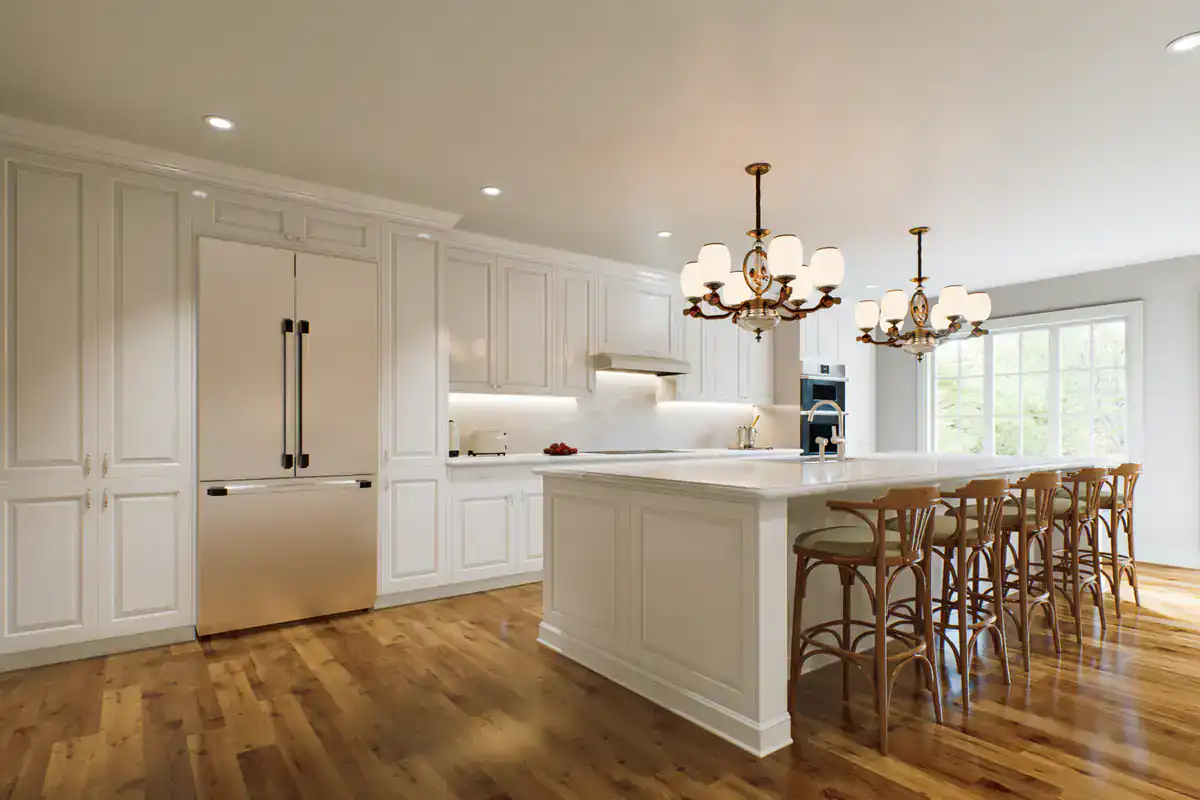
Custom Kitchen Cabinets in East Hampton, NY
Built for the Salt Air, the Historic Walls, and the Hamptons Standard
East Hampton homes don’t fit standard cabinet sizes and they don’t deserve standard cabinet quality. We manufacture bespoke custom kitchen cabinets built precisely for the spaces, conditions, and expectations that define this end of Long Island.
- Owner on site
- Industry experience since 1993
- Based in West Babylon
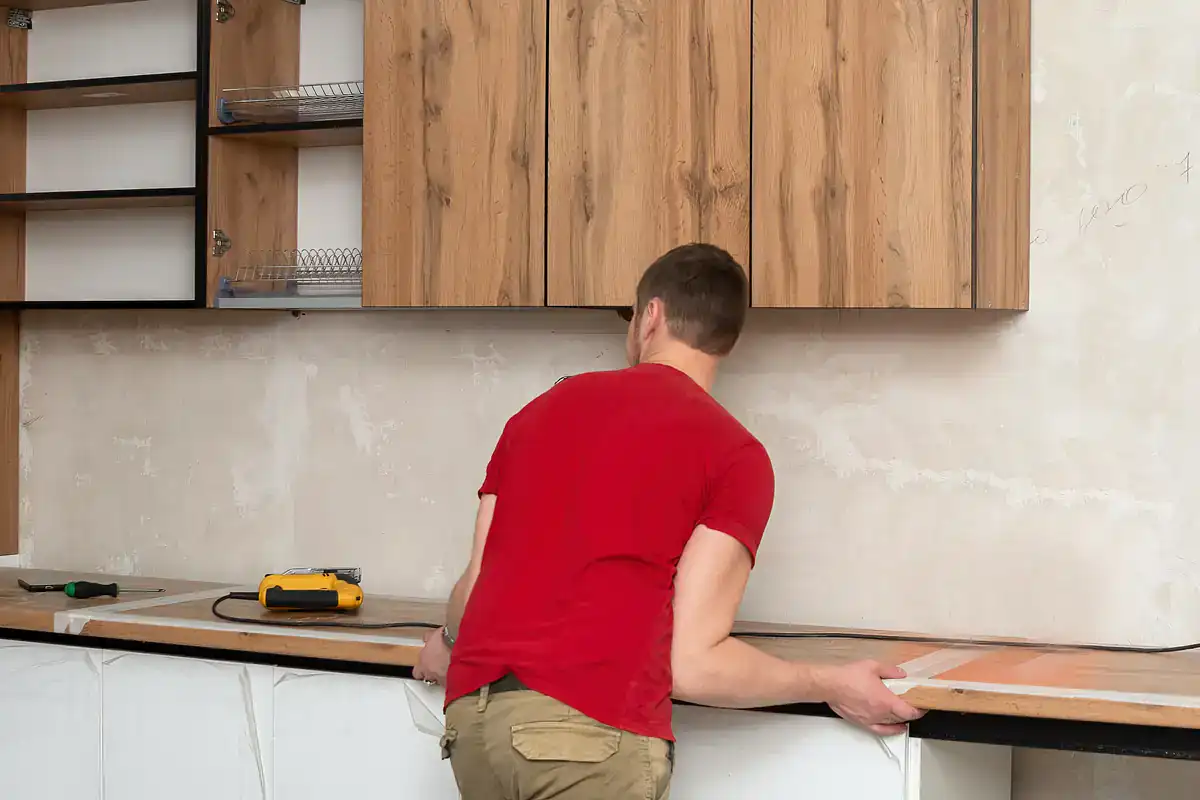
Custom Kitchen Cabinetry East Hampton, NY
What Happens When Cabinets Are Built to Your Exact Space, Not a Production Template
When cabinets are manufactured to the exact measurements of your space not adapted from a standard production line the result is a kitchen that looks like it was always supposed to be there. No filler strips. No visible gaps where the wall angles slightly off-square. No hardware that rattles after a season.
That matters everywhere, but it matters more in East Hampton. A significant portion of the town’s housing stock predates the concept of standardized cabinet dimensions entirely. Homes throughout the village’s historic districts and across Amagansett, Springs, and Wainscott were built in eras when kitchens were framed by hand, walls were rarely perfectly plumb, and ceiling heights followed no modern convention. If you’ve already had a stock or semi-custom dealer tell you your kitchen is “difficult,” that’s not a problem with your kitchen. That’s a problem with their product.
The coastal environment adds another layer. East Hampton sits between the Atlantic Ocean and Gardiners Bay, and the salt air that moves through this area year-round is genuinely hard on lower-quality cabinet materials. Particleboard the substrate used in most stock cabinets absorbs moisture, swells, and breaks down faster in a marine climate. Properly sealed hardwood construction and quality plywood boxes hold up where cheaper materials fail. When you’re investing in a property in this market, that durability difference compounds over time.
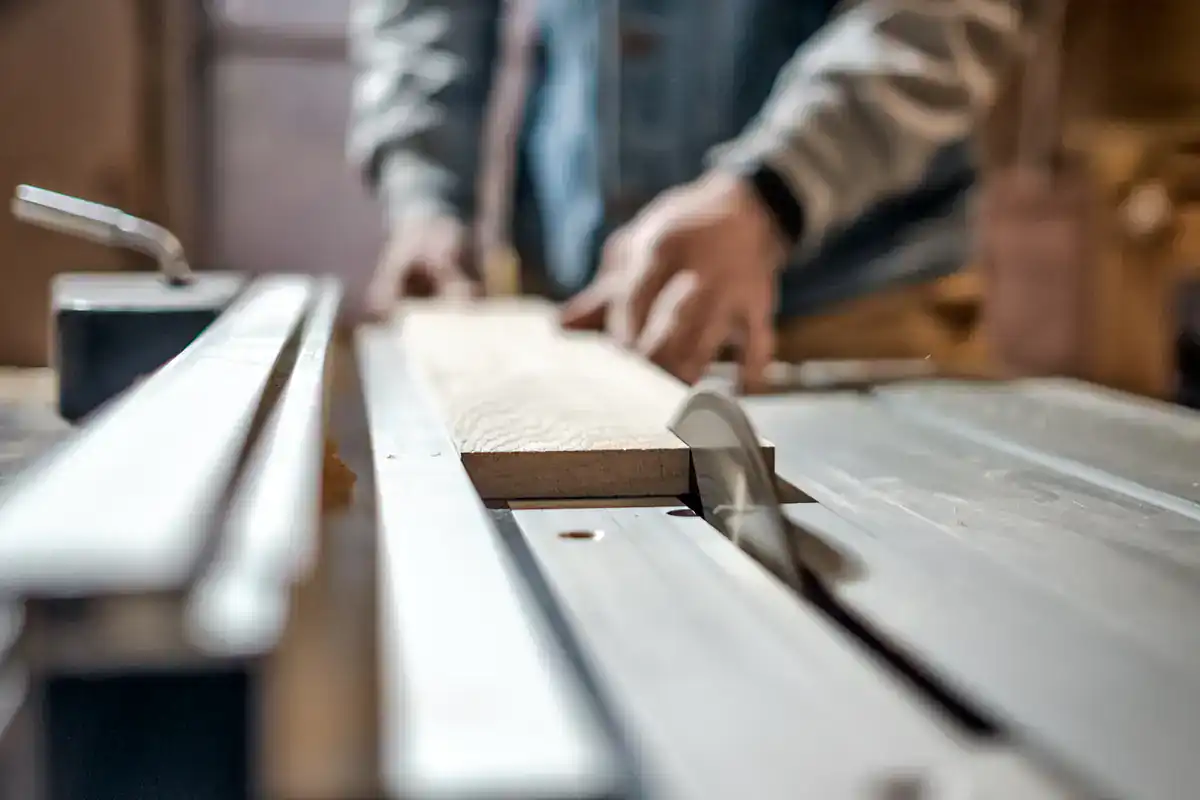
Custom Kitchen Cabinet Manufacturer East Hampton, NY
We Build It In-House Not Order It From a Catalog
Sir James Management Corp is a premium custom cabinetry manufacturer based in New York. The distinction matters: we don’t operate as a showroom that selects from a catalog and places an order with a third-party factory. We manufacture the cabinets in-house, which means quality control happens before anything ships, and there’s one accountable party from the design consultation through the final installation walkthrough.
For East Hampton homeowners many of whom are managing a renovation from a primary residence in the city while the work happens on the East End that accountability isn’t a minor detail. You need a manufacturer that communicates proactively, hits its milestones, and doesn’t leave your kitchen torn apart between your visits out on Route 27. We serve kitchens, bathrooms, closets, and unique home spaces, so if you’re renovating more than just the kitchen, you’re working with one manufacturer across the whole project.
The premium, bespoke positioning reflects what we actually make: high-end materials, solid construction, and finishes built to hold up in a coastal environment. That’s the match for what East Hampton properties demand.
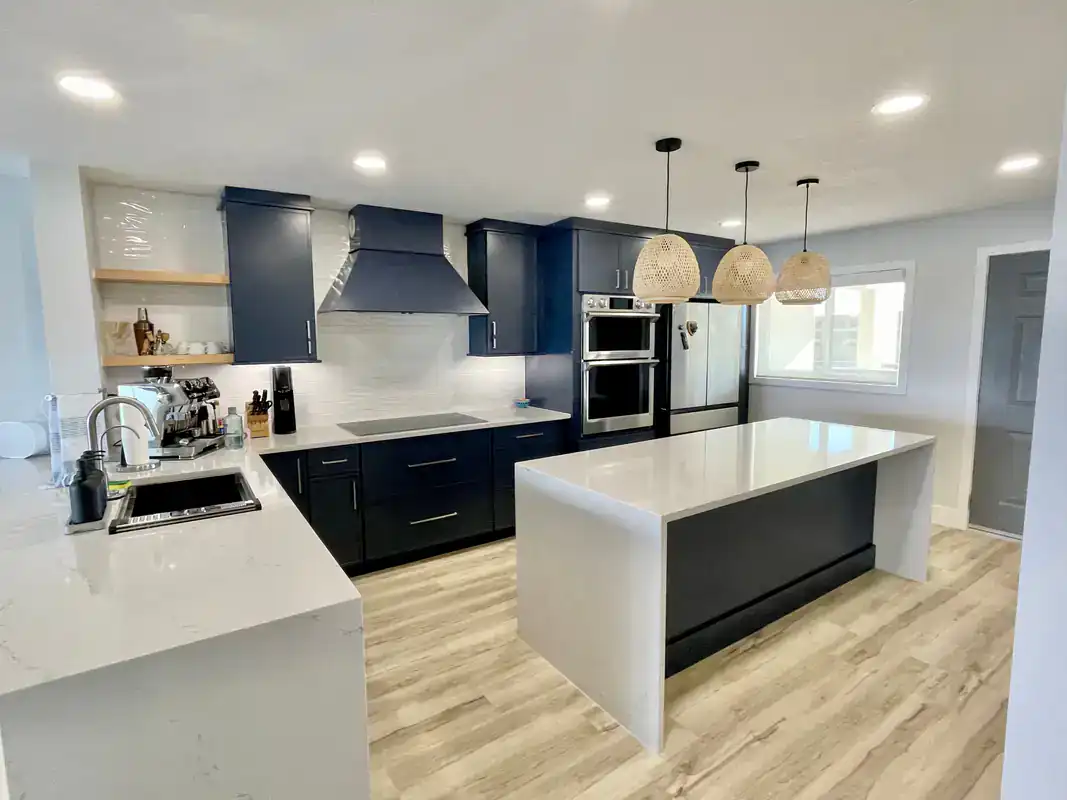
Custom Kitchen Cabinet Installation East Hampton, NY
From First Measurement to Final Walkthrough No Guesswork, No Compromises
It starts with a design consultation. You don’t need to walk in knowing exactly what you want that’s what the process is for. We listen to understand your space, how you use your kitchen, what you’re trying to solve, and what the finished product needs to look like. For a historic East Hampton home with irregular dimensions or an Amagansett property with a kitchen that’s seen better decades, this is where the custom approach begins to separate itself from anything off a shelf.
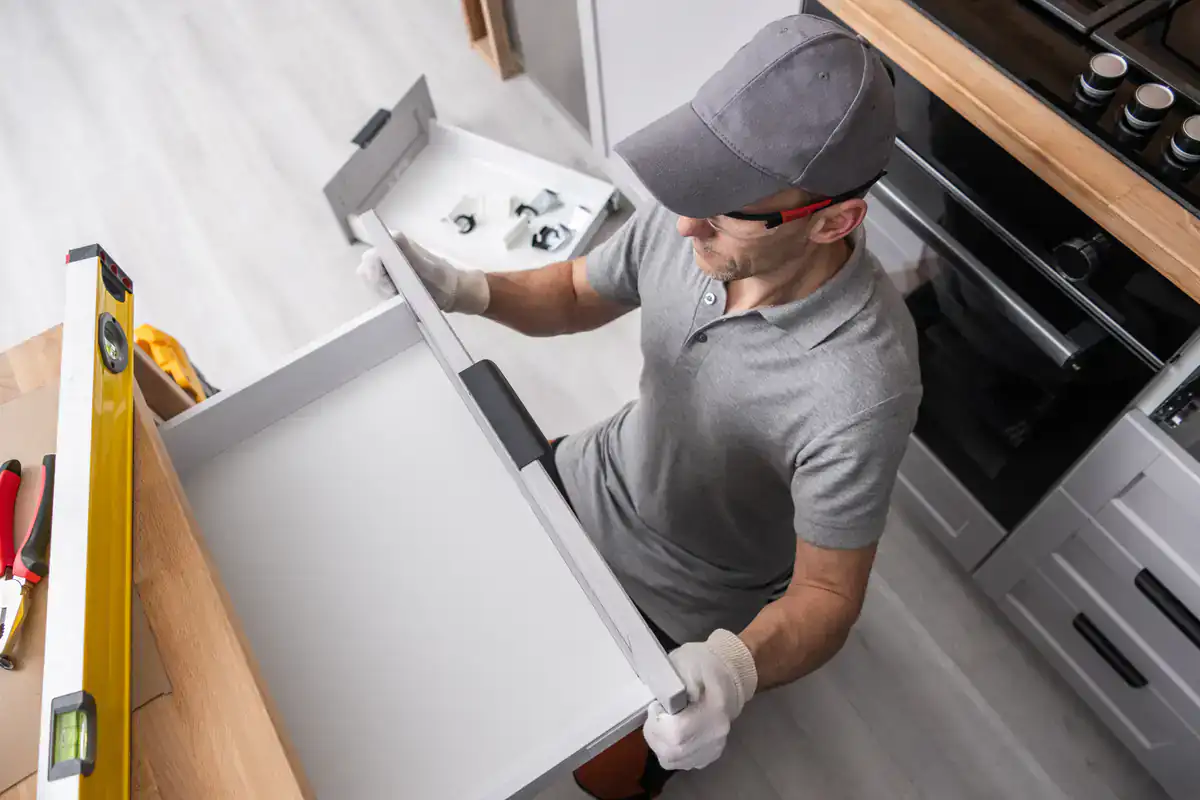
From there, we take precise measurements. Not estimates actual measurements of every wall, every angle, every ceiling height, every appliance position. That data drives the manufacturing. We build the cabinets to those dimensions at our facility, with quality checks happening in-house before anything leaves the shop.
One practical note for East Hampton homeowners: kitchen cabinet installation that involves associated plumbing, electrical work, or structural changes will require permits through the East Hampton Town Building Department or, for properties within the village limits, the Village of East Hampton Building Department they operate as separate permit authorities. If your project is a straightforward cabinet replacement with no structural changes, the permitting picture is simpler, but it’s worth clarifying scope early.
Scheduling is also worth thinking about seasonally. If you want the kitchen finished before summer use, the design and order process should ideally begin in late winter or early spring, given that custom manufacturing typically runs six to twelve weeks from design approval to installation-ready.

Luxury Custom Kitchen Cabinets East Hampton, NY
Every Cabinet Built to the Conditions of This Specific Home
We manufacture custom cabinets for kitchens, bathrooms, closets, and unique home spaces. Our kitchen work covers everything from full custom kitchen cabinet design and layout planning through fabrication and installation. If you’re looking at kitchen cabinet replacement whether you’re updating a recently purchased property, refreshing a long-held Hamptons home before listing it, or simply bringing an outdated kitchen up to the standard the rest of the house deserves we start from scratch with your actual space, not a standard template.
For East Hampton specifically, a few things consistently come up. Homes in the village’s historic districts often have kitchens with non-standard ceiling heights, off-plumb walls, or layouts that don’t map to any modern cabinet line. Our custom manufacturing approach handles this without workarounds. Coastal humidity and salt air exposure consistent across the South Fork make material quality a real variable, not a marketing talking point. The construction standards we use are appropriate for a marine environment in a way that stock and value-tier semi-custom products are not.
This is also a market where the kitchen is frequently an entertaining space, not just a functional one. Hamptons properties are used for hosting, and the kitchen design reflects that. Custom cabinets for a kitchen remodel in East Hampton often involve integrated storage, design-forward hardware, and finishes that hold up to concentrated seasonal use followed by months of vacancy a pattern that tests lower-quality materials in ways that a typical year-round suburban kitchen never would. We account for all of it.
Questions from East Hampton
A few things you may be wondering
Are custom kitchen cabinets worth the cost for a seasonal East Hampton property?
For a property you’re using primarily in the summer, it’s a fair question. The short answer is yes and the reasoning is specific to how East Hampton homes are actually used and what they’re worth.
Seasonal homes in East Hampton experience something most primary residences don’t: months of vacancy with fluctuating humidity as systems cycle on and off, followed by weeks of intense, concentrated use during summer. That cycle is genuinely hard on lower-quality cabinet materials. Particleboard swells and contracts, joints loosen, finishes bubble. Custom cabinets built from solid materials and properly sealed hardwood components hold up through that pattern where stock cabinets degrade noticeably within a few seasons.
There’s also the investment context. In a market where the typical home is worth well over a million dollars, the kitchen is one of the first things buyers and renters evaluate. Minor kitchen remodels nationally return between 96% and 113% on investment. In a high-end market like East Hampton, where the people walking through your kitchen have been in a lot of exceptional kitchens, the quality of the cabinetry is visible and it matters. Custom cabinetry built to last is the practical choice for a property at this price point.
How long does it take to get custom kitchen cabinets designed, built, and installed?
From design approval to installation-ready, custom cabinet manufacturing typically runs six to twelve weeks. That’s the fabrication window it doesn’t include the time spent on the front end in the design consultation and measurement phase, which can take a few weeks depending on the complexity of the project and how quickly decisions get made.
For East Hampton homeowners with a summer deadline in mind, this timeline has real implications. If you want a finished kitchen before the season begins, the design process should ideally start in late winter January through March at the latest for a June target. Waiting until April to start the conversation puts a summer-ready kitchen at risk. The off-season renovation window that many Hamptons homeowners use October through April, when the property is easier to access and contractors have more flexibility aligns well with the custom cabinet timeline. Starting in fall for a spring installation is a common and practical approach for properties on the East End.
What cabinet materials actually hold up in a coastal environment like East Hampton?
The coastal environment on the South Fork is a real variable in cabinet selection, and it’s one that doesn’t get discussed enough when homeowners are comparing options. Salt air carries sodium chloride particles that penetrate wood finishes over time, and the humidity levels near the Atlantic and Gardiners Bay cause wood to expand and contract seasonally. The materials that hold up best in this environment are solid hardwood components with properly sealed finishes, and cabinet boxes built from plywood rather than particleboard.
Particleboard the substrate used in most stock cabinets and many value-tier semi-custom lines absorbs moisture and swells. Once the swelling starts, the structural integrity of the box degrades: joints loosen, doors fall out of alignment, and the finish begins to separate. Plywood construction resists this because it’s dimensionally more stable and doesn’t absorb moisture the same way. For an East Hampton home that’s exposed to marine air year-round, the difference between plywood and particleboard construction isn’t a subtle quality distinction it’s the difference between cabinets that last a decade and cabinets that need replacing in five years.
What's the difference between custom, semi-custom, and stock cabinets for a kitchen remodel?
Stock cabinets come in fixed standard sizes typically in two-inch width increments and are manufactured in advance, sitting in a warehouse until ordered. They’re the fastest option but the least flexible, and they almost always require filler strips to cover gaps in kitchens that don’t conform to their standard dimensions. For a home in East Hampton’s historic districts, where kitchens were framed by hand in eras that predate standardized sizing, stock cabinets are rarely a clean fit.
Semi-custom cabinets offer more size flexibility and finish options than stock, but they still come from a production line with constraints on dimensions, configurations, and storage solutions. They’re a middle-ground product better than stock, but still a compromise for a non-standard space. Custom cabinets are manufactured specifically for your kitchen: every dimension, every configuration, every storage detail built to the actual measurements of your space. For a kitchen remodel in East Hampton whether you’re working with a historic village home, a shingle-style property in Amagansett, or a contemporary build in Wainscott custom manufacturing is the approach that produces a finished result without visible workarounds.
Do I need permits for custom kitchen cabinet installation in East Hampton?
It depends on the scope of the project. A straightforward kitchen cabinet replacement removing existing cabinets and installing new ones in the same positions, with no changes to plumbing, electrical, or structural elements typically doesn’t require a permit in most jurisdictions. However, if your kitchen remodel involves moving a sink, relocating electrical outlets or under-cabinet lighting circuits, or making any structural changes to walls or ceilings, those elements will require permits from the relevant building authority.
East Hampton is worth understanding specifically here: the Town of East Hampton Building Department and the Village of East Hampton Building Department operate as separate permit authorities. If your property is within the incorporated village limits, you’re dealing with the village department. If it’s in one of the hamlets Amagansett, Montauk, Springs, Wainscott you’re dealing with the town department. Additionally, properties within the village’s historic districts may be subject to review by the Historic Preservation or Architectural Review Board for certain types of work. It’s worth clarifying the scope of your project early in the process so the permitting picture is clear before work begins.
Can Sir James Management Corp handle cabinets for other rooms beyond the kitchen?
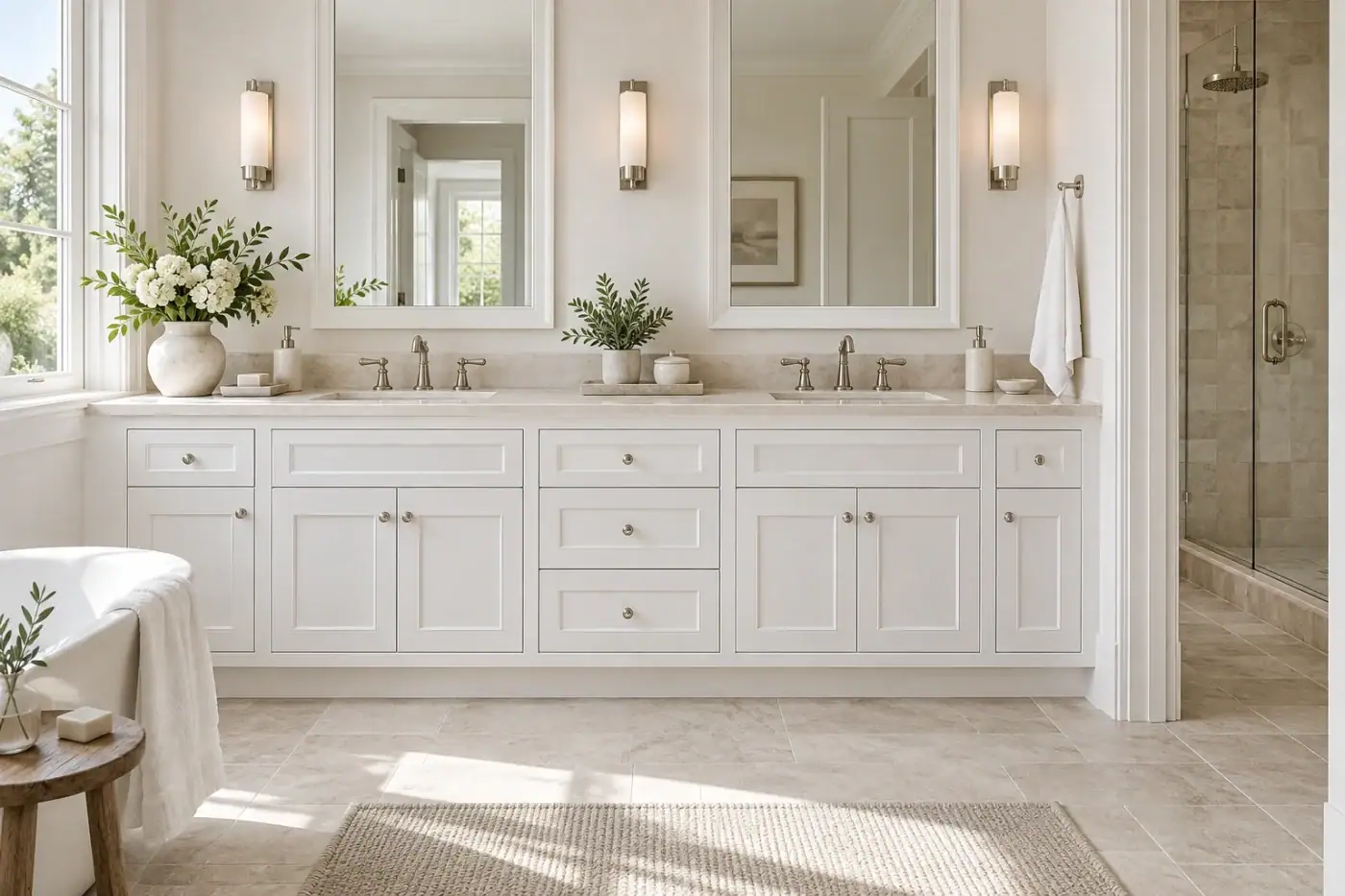
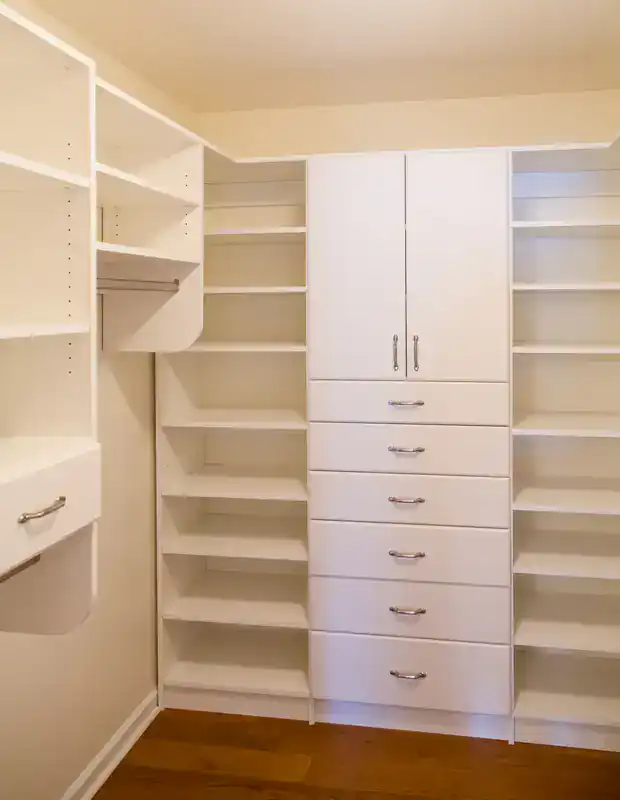
Yes we manufacture custom cabinetry for kitchens, bathrooms, closets, and unique home spaces. For East Hampton homeowners doing a broader renovation, this matters practically. Working with a single manufacturer across multiple spaces means consistent materials, consistent finishes, and a unified design language throughout the home. You’re not trying to match a kitchen cabinet finish from one company to a bathroom vanity from another and hoping they look intentional together.
For Hamptons properties specifically, this kind of cohesion tends to matter more than it would in a typical suburban renovation. These are homes where guests notice the details, where real estate agents reference the quality of finishes in listing descriptions, and where the overall impression of the interior reflects directly on the property’s value and rental appeal. Having one manufacturer accountable for the full scope kitchen, primary bath, walk-in closet, built-in storage simplifies the project management and produces a more consistent result. If you’re planning a comprehensive renovation of a property on the East End, it’s worth discussing the full scope from the start rather than treating each room as a separate project.
More ways we can help
Other services in East Hampton